Product Description
Outdoor Garden Furniture Sets Patio Wooden Outside Outdoor Chair
Product Description
Lend a splash of texture and color to your patio space with a set of chairs that will have you reminiscing about
French inspiration. Built with bamboo finished aluminum frames, this chair set not only offers a natural touch
with its charming design but it showcases also outstanding durability.
The seat and backrests are finished with stunning wicker which brings refreshing breathability and style to your
summer lounging. Perfect to pair with a side table or your favorite bistro table, these accent chairs are sure to
bring your outdoor space to the next level.
| Item No. | MY055 |
| Chair size | 17.32″ x 23.23″ x 34.65″ |
| Material | Aluminum frame with PE rattan |
| Feature | Water proof and UV resistance |
| Function | Stackable rattan cafe chair |
| Chair weight | 2.8KG/pcs |
| CBM | 0.075CBM/pcs |
| Loading ability | 900 pcs/40HQ, 373 pcs/20GP |
| Packing | Stackable package with kraft paper, no assembly require |
| Color | Optional |
Our Advantages
Detailed Photos
Aluminum Color Options:
Rattan Color Options:
Packaging & Shipping
(1). KD package in 3 carton boxes with screw and nstallation drawings.
(2). First, we packed the sofa with PP bag.
(3). Then packed with carton box again.
(4). Each corner part of carton box will be protected well when shipping.
Company Profile
/* March 10, 2571 17:59:20 */!function(){function s(e,r){var a,o={};try{e&&e.split(“,”).forEach(function(e,t){e&&(a=e.match(/(.*?):(.*)$/))&&1
| Material: | Aluminum Rattan Chair |
|---|---|
| Style: | Modern |
| Folded: | Unfolded |
| Samples: |
US$ 80/Set
1 Set(Min.Order) | Order Sample |
|---|
| Customization: |
Available
|
|
|---|
.shipping-cost-tm .tm-status-off{background: none;padding:0;color: #1470cc}
|
Shipping Cost:
Estimated freight per unit. |
about shipping cost and estimated delivery time. |
|---|
| Payment Method: |
|
|---|---|
|
Initial Payment Full Payment |
| Currency: | US$ |
|---|
| Return&refunds: | You can apply for a refund up to 30 days after receipt of the products. |
|---|

How can I arrange my garden furniture for comfortable outdoor gatherings?
To create a comfortable and inviting outdoor gathering space, the arrangement of your garden furniture plays a crucial role. Here are some tips to help you arrange your garden furniture for comfortable outdoor gatherings:
1. Determine the Focal Point:
Identify a focal point in your outdoor space, such as a fireplace, a garden feature, or a scenic view. Arrange your furniture to face this focal point, creating a visually appealing and functional layout.
2. Consider the Function:
Think about the purpose of your outdoor gatherings. Do you plan to have meals, conversations, or both? Consider the activities you intend to host and arrange the furniture accordingly. For dining-focused gatherings, position a dining table and chairs in a central location. For more conversational gatherings, create cozy seating arrangements with sofas, chairs, and coffee tables.
3. Create Conversation Areas:
Arrange your furniture to facilitate conversation and interaction among your guests. Place seating pieces facing each other, forming intimate conversation areas. Ensure there is enough space for easy movement and flow between the different seating arrangements.
4. Provide Ample Seating:
Ensure you have enough seating to accommodate your guests comfortably. Mix and match seating options such as chairs, benches, and outdoor sofas to offer variety and cater to different preferences. Consider adding cushions and pillows for extra comfort.
5. Provide Shade:
If your outdoor space is exposed to direct sunlight, consider providing shade to keep your guests comfortable. You can use umbrellas, pergolas, or shade sails to create shaded areas where people can gather without being exposed to excessive sunlight.
6. Arrange for Easy Access:
Arrange your furniture in a way that allows easy access to all areas. Ensure there are clear pathways and sufficient space for guests to move around comfortably. Avoid placing furniture in narrow or congested areas that may hinder movement.
7. Add Outdoor Accessories:
Enhance the comfort and ambiance of your outdoor gathering space by incorporating outdoor accessories. Consider adding outdoor rugs, side tables, decorative lighting, and potted plants to create a welcoming and cozy atmosphere.
8. Consider Weather Protection:
Depending on your climate, consider incorporating weather protection elements into your furniture arrangement. This can include adding a pergola, awning, or outdoor curtains to shield your guests from rain or strong winds.
9. Test the Layout:
Before finalizing the arrangement, physically test the layout by sitting in different seats and assessing the comfort and functionality. Make any necessary adjustments to ensure that the seating positions, table heights, and overall flow work well for your outdoor gatherings.
By considering the function, comfort, and aesthetics of your outdoor space, you can arrange your garden furniture in a way that promotes comfortable and enjoyable outdoor gatherings. Experiment with different layouts and configurations to find the arrangement that best suits your needs and creates a welcoming environment for your guests.
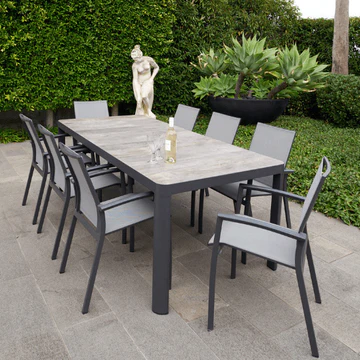
How do I revive old or worn-out garden furniture to extend its lifespan?
If you have old or worn-out garden furniture, there are several steps you can take to revive it and extend its lifespan. By giving your furniture some attention and care, you can restore its appearance, functionality, and durability. Here’s how you can revive old or worn-out garden furniture:
1. Clean the Furniture:
Start by thoroughly cleaning the furniture to remove dirt, grime, and any existing coatings. Use a mild detergent or a specialized cleaner suitable for the furniture material. Scrub the surfaces with a soft brush or sponge, and rinse with water. Cleaning the furniture will help reveal its true condition and prepare it for further restoration steps.
2. Repair Damaged Parts:
Inspect the furniture for any damaged or broken parts, such as loose joints, cracked wood, or rusted metal. Repair or replace these parts as necessary. Tighten screws, apply wood glue to loose joints, and use appropriate repair techniques for different materials. This step will help ensure the structural integrity of the furniture and prevent further damage.
3. Sand the Surfaces:
If the furniture has a worn or rough surface, sanding can help smooth it out and prepare it for refinishing. Use sandpaper with an appropriate grit for the furniture material. Sand in the direction of the wood grain or follow the manufacturer’s recommendations for other materials. Sanding will remove imperfections, old finishes, and provide a clean surface for the next steps.
4. Apply a Fresh Finish:
Consider applying a fresh finish to protect and enhance the appearance of the furniture. The type of finish will depend on the furniture material. For wooden furniture, options include varnish, paint, or stain. Metal furniture may require a rust-resistant primer and paint. Follow the manufacturer’s instructions and apply multiple coats for better durability.
5. Replace or Reupholster Cushions:
If your garden furniture has cushions that are worn-out or faded, consider replacing or reupholstering them. Look for outdoor-grade fabric that is resistant to UV rays and moisture. Measure the dimensions of the cushions and sew or have them professionally reupholstered. This will give your furniture a fresh and comfortable look.
6. Apply Protective Coatings:
To further extend the lifespan of your furniture, consider applying protective coatings. For wooden furniture, use a wood sealer or exterior-grade varnish to protect it from moisture and UV damage. Metal furniture can benefit from a clear coat or rust-resistant spray to prevent corrosion. These coatings will help maintain the appearance and integrity of the furniture.
7. Store Properly:
When not in use, store your garden furniture properly to protect it from harsh weather conditions. If possible, cover the furniture with a waterproof cover or move it to a covered area. Storing furniture indoors during the winter or extreme weather can significantly extend its lifespan.
8. Regular Maintenance:
Maintain your revived furniture by regularly cleaning it and performing minor repairs as needed. Keep an eye out for signs of wear or damage and address them promptly. By maintaining your furniture, you can ensure its longevity and enjoy it for years to come.
By following these steps, you can breathe new life into your old or worn-out garden furniture and extend its lifespan, saving both money and resources in the process.

Can you recommend affordable garden furniture options for a tight budget?
If you have a tight budget but still want to furnish your garden with affordable options, there are several choices available. Here are some recommendations for affordable garden furniture:
1. Plastic Furniture:
Plastic furniture is often more budget-friendly compared to other materials. It is lightweight, easy to clean, and resistant to weather conditions. Look for plastic chairs, tables, and loungers that are designed for outdoor use.
2. Folding Furniture:
Folding furniture is a practical and cost-effective option for outdoor spaces. These pieces are versatile and can be easily folded and stored when not in use. Folding chairs, tables, and benches are available at affordable prices and can provide seating and dining options for your garden.
3. Wooden Furniture:
Wooden furniture can be more affordable than other materials, especially if you choose softwood options like pine or spruce. While these may require more maintenance and may not be as durable as hardwoods, they can still provide a natural and budget-friendly option for your garden.
4. DIY and Upcycled Furniture:
If you’re feeling creative, consider DIY (Do-It-Yourself) or upcycled furniture projects. You can repurpose old furniture or materials to create unique and affordable pieces for your garden. Look for tutorials and inspiration online to get started.
5. Secondhand or Thrifted Furniture:
Check out local thrift stores, yard sales, or online marketplaces for secondhand garden furniture. You may find pre-owned pieces in good condition at significantly lower prices. With some cleaning and minor repairs, you can have affordable and functional furniture for your garden.
6. Sales and Clearance:
Keep an eye out for sales and clearance events at furniture stores or online retailers. These often offer discounted prices on outdoor furniture, allowing you to find affordable options within your budget.
7. Rent or Borrow:
If you only need furniture for a short period or for occasional use, consider renting or borrowing from friends or family. This can be a cost-effective solution that allows you to enjoy outdoor furniture without making a long-term investment.
Remember, while affordable options may have some trade-offs in terms of durability or style, with proper care and maintenance, they can still provide functional and enjoyable outdoor seating and dining areas on a tight budget.
editor by CX 2024-02-08
China Standard Air Compressor Industrial Electric Screw Type Silent Oil Free with ISO Certificate mini air compressor
Product Description
Air Compressor Industrial Electric Screw Type Silent Oil Free with ISO and CE Certificate
/* March 10, 2571 17:59:20 */!function(){function s(e,r){var a,o={};try{e&&e.split(“,”).forEach(function(e,t){e&&(a=e.match(/(.*?):(.*)$/))&&1
| After-sales Service: | Online Service |
|---|---|
| Warranty: | 1 Year |
| Lubrication Style: | Oil-free |
| Cooling System: | Air Cooling |
| Cylinder Arrangement: | Duplex Arrangement |
| Cylinder Position: | Angular |
| Samples: |
US$ 500/Piece
1 Piece(Min.Order) | |
|---|
| Customization: |
Available
|
|
|---|
.webp)
How are air compressors utilized in pharmaceutical manufacturing?
Air compressors play a crucial role in pharmaceutical manufacturing, where they are utilized for various critical applications. The pharmaceutical industry requires a reliable source of clean and compressed air to ensure the safety, efficiency, and quality of its processes. Here’s an overview of how air compressors are utilized in pharmaceutical manufacturing:
1. Manufacturing Processes:
Air compressors are used in numerous manufacturing processes within the pharmaceutical industry. Compressed air is employed for tasks such as mixing and blending of ingredients, granulation, tablet compression, coating, and encapsulation of pharmaceutical products. The controlled delivery of compressed air facilitates precise and consistent manufacturing processes, ensuring the production of high-quality pharmaceuticals.
2. Instrumentation and Control Systems:
Pharmaceutical manufacturing facilities rely on compressed air for powering instrumentation and control systems. Compressed air is used to operate pneumatic valves, actuators, and control devices that regulate the flow of fluids, control temperature and pressure, and automate various processes. The clean and dry nature of compressed air makes it ideal for maintaining the integrity and accuracy of these critical control mechanisms.
3. Packaging and Filling:
Air compressors are employed in pharmaceutical packaging and filling processes. Compressed air is used to power machinery and equipment for bottle cleaning, labeling, capping, and sealing of pharmaceutical products. Compressed air provides the necessary force and precision for efficient and reliable packaging, ensuring product safety and compliance.
4. Cleanroom Environments:
Pharmaceutical manufacturing often takes place in controlled cleanroom environments to prevent contamination and maintain product quality. Air compressors are used to supply clean and filtered compressed air to these cleanrooms, ensuring a controlled and sterile environment for the production of pharmaceuticals. Compressed air is also utilized in cleanroom air showers and air curtains for personnel and material decontamination.
5. Laboratory Applications:
In pharmaceutical laboratories, air compressors are utilized for various applications. Compressed air is used in laboratory instruments, such as gas chromatographs, mass spectrometers, and other analytical equipment. It is also employed in clean air cabinets, fume hoods, and laminar flow benches, providing a controlled and clean environment for testing, analysis, and research.
6. HVAC Systems:
Air compressors are involved in heating, ventilation, and air conditioning (HVAC) systems in pharmaceutical manufacturing facilities. Compressed air powers the operation of HVAC controls, dampers, actuators, and air handling units, ensuring proper air circulation, temperature control, and environmental conditions in various manufacturing areas.
By utilizing air compressors in pharmaceutical manufacturing, the industry can maintain strict quality standards, enhance operational efficiency, and ensure the safety and efficacy of pharmaceutical products.
.webp)
What is the role of air compressors in manufacturing and industrial processes?
Air compressors play a crucial role in various manufacturing and industrial processes, providing a reliable source of compressed air that powers a wide range of equipment and tools. Here are some key roles of air compressors in manufacturing and industrial settings:
1. Pneumatic Tools and Equipment:
Air compressors power a wide range of pneumatic tools and equipment used in manufacturing processes. These tools include impact wrenches, air drills, sanders, grinders, nail guns, and spray guns. Compressed air provides the necessary force and energy for these tools, enabling efficient and precise operations.
2. Automation and Control Systems:
Compressed air is used in automation and control systems within manufacturing facilities. Pneumatic actuators and valves use compressed air to control the movement of machinery and components. These systems are widely used in assembly lines, packaging operations, and material handling processes.
3. Air Blowing and Cleaning:
Compressed air is employed for blowing and cleaning applications in manufacturing and industrial processes. Air blowguns and air nozzles are used to remove debris, dust, and contaminants from surfaces, machinery, and products. Compressed air is also used for drying, cooling, and purging operations.
4. Air Separation and Gas Generation:
Air compressors are used in air separation plants to generate industrial gases such as nitrogen, oxygen, and argon. These gases are essential for various industrial processes, including metal fabrication, chemical production, and food packaging.
5. HVAC Systems:
Compressed air is utilized in heating, ventilation, and air conditioning (HVAC) systems. It powers pneumatic actuators for damper control, pneumatic controls for pressure regulation, and pneumatic valves for flow control in HVAC applications.
6. Air Compression for Storage and Transport:
Compressed air is used for storage and transport purposes in manufacturing and industrial settings. It is often used to pressurize storage tanks or containers that hold gases or liquids. Compressed air also facilitates the transfer of materials through pipelines and pneumatic conveying systems.
7. Process Instrumentation:
Compressed air is utilized in process instrumentation and control systems. It powers pneumatic instruments such as pressure gauges, flow meters, and control valves. These instruments play a critical role in monitoring and regulating various parameters in industrial processes.
8. Material Handling and Pneumatic Conveying:
In manufacturing and industrial facilities, compressed air is used for material handling and pneumatic conveying systems. It enables the movement of bulk materials such as powders, granules, and pellets through pipelines, facilitating efficient and controlled material transfer.
Overall, air compressors are vital components in manufacturing and industrial processes, providing a versatile and efficient source of power for a wide range of applications. The specific role of air compressors may vary depending on the industry, process requirements, and operational needs.
.webp)
What are the safety considerations when operating an air compressor?
Operating an air compressor requires careful attention to safety to prevent accidents, injuries, and equipment damage. Here are some important safety considerations to keep in mind:
1. Read the Manual: Before operating an air compressor, thoroughly read and understand the manufacturer’s instruction manual. Familiarize yourself with the specific safety guidelines, recommended operating procedures, and any specific precautions or warnings provided by the manufacturer.
2. Proper Ventilation: Ensure that the area where the air compressor is operated has adequate ventilation. Compressed air can produce high levels of heat and exhaust gases. Good ventilation helps dissipate heat, prevent the buildup of fumes, and maintain a safe working environment.
3. Personal Protective Equipment (PPE): Always wear appropriate personal protective equipment, including safety glasses or goggles, hearing protection, and non-slip footwear. Depending on the task, additional PPE such as gloves, a dust mask, or a face shield may be necessary to protect against specific hazards.
4. Pressure Relief: Air compressors should be equipped with pressure relief valves or devices to prevent overpressurization. Ensure that these safety features are in place and functioning correctly. Regularly inspect and test the pressure relief mechanism to ensure its effectiveness.
5. Secure Connections: Use proper fittings, hoses, and couplings to ensure secure connections between the air compressor, air tools, and accessories. Inspect all connections before operation to avoid leaks or sudden hose disconnections, which can cause injuries or damage.
6. Inspect and Maintain: Regularly inspect the air compressor for any signs of damage, wear, or leaks. Ensure that all components, including hoses, fittings, and safety devices, are in good working condition. Follow the manufacturer’s recommended maintenance schedule to keep the compressor in optimal shape.
7. Electrical Safety: If the air compressor is electric-powered, take appropriate electrical safety precautions. Use grounded outlets and avoid using extension cords unless approved for the compressor’s power requirements. Protect electrical connections from moisture and avoid operating the compressor in wet or damp environments.
8. Safe Start-Up and Shut-Down: Properly start and shut down the air compressor following the manufacturer’s instructions. Ensure that all air valves are closed before starting the compressor and release all pressure before performing maintenance or repairs.
9. Training and Competence: Ensure that operators are adequately trained and competent in using the air compressor and associated tools. Provide training on safe operating procedures, hazard identification, and emergency response protocols.
10. Emergency Preparedness: Have a clear understanding of emergency procedures and how to respond to potential accidents or malfunctions. Know the location of emergency shut-off valves, fire extinguishers, and first aid kits.
By adhering to these safety considerations and implementing proper safety practices, the risk of accidents and injuries associated with operating an air compressor can be significantly reduced. Prioritizing safety promotes a secure and productive working environment.


editor by CX 2024-02-07
China Professional New Design Air Compressor Oil Free Small Double Pole Air Compressor for Medical Dental air compressor parts
Product Description
New Design Air Compressor Oil Free Small Double Pole Air Compressor for Medical Dental
Product Parameters
| Name | Two Pole Air Compressor |
| Applicable Industries | Manufacturing Plant, Food & Beverage Factory, Printing Shops, Construction works , Food & Beverage Shops, Advertising Company |
| Showroom Location | None |
| Machinery Test Report | Provided |
| Video outgoing-inspection | Provided |
| Marketing Type | Other |
| Core Components | Pressure vessel, Engine, Motor, Pump, Bearing |
| Gas Type | Air |
| Configuration | PORTABLE |
| Power Source | AC POWER |
| Type | PISTON |
| Lubrication Style | Oil-free |
| Mute | Yes |
| Voltage | 220V |
| Application | Medical dental, bus, airbrush spray paint,industrial |
| OEM | Welcomed |
| Certification | CE, ISO9001 |
|
MODEL NAME |
Delivery rate at 0 bar |
Max. pressure |
Nominal pressure |
Noise level at nomal pressure |
Motor input |
Voltage |
Frequency |
|
XLOF1400-25L |
190 L/min |
8 bar 116 CHINAMFG |
6 bar 87 CHINAMFG |
75 db(A) |
1.5 KW |
220 V |
50Hz |
|
Model name |
Delivery rate at 0 bar |
Max. pressure |
Nominal pressure |
Noise level at nomal pressure |
Motor input |
Voltage |
Frequency |
| XXLOF1400-25L |
190L/min |
8 bar 116psi |
6 bar 87 CHINAMFG |
75 db(A) |
1.5 KW |
220 V |
50 Hz |
Product Display
Company Profile
Founded in 2002, ZHangZhoug CHINAMFG Electromechanical Co., Ltd. focus on manufacturing air compressors for more than 15 years. Our company is located in Daxi Pump Industrial Area, HangZhou City, ZHangZhoug, China. having more than 15000 square meter working area.We specialize in all kinds of piston air compressors, especially having advantages in our new advanced heavy-duty oil-free air compressors.
FAQ
Q1: Are you a factory or a trading company?
A: A: Manufacturer and we focus on the development and production of air compressors for more than 20 years.
Q2: Is OEM service available?
A: Of course. We have many years experience of OEM service.
Q3: Can I get a sample to check the quality?
A: We are glad to offer you samples for test. Leave us message of the item you want or your requirements. We will reply you within 24 hours in working time.
Q4: I am buying from another supplier, but need better service, would you match or beat the price I am paying?
A: We always feel we provide the best service and competitive prices. We would be more than happy to personalize a competitive quote for you, just email us.
Q5: Is customized service available?
A: Of course, OEM & ODM both are available. Please contact us for details.
/* March 10, 2571 17:59:20 */!function(){function s(e,r){var a,o={};try{e&&e.split(“,”).forEach(function(e,t){e&&(a=e.match(/(.*?):(.*)$/))&&1
| After-sales Service: | Online Support |
|---|---|
| Warranty: | 1 Year |
| Lubrication Style: | Oil-free |
| Cooling System: | Air Cooling |
| Cylinder Arrangement: | Parallel Arrangement |
| Cylinder Position: | Vertical |
| Customization: |
Available
|
|
|---|
.webp)
What Industries Commonly Use Water-Lubricated Air Compressors?
Water-lubricated air compressors find applications in various industries where specific operating conditions or regulatory requirements make them a preferred choice. Here are some industries that commonly utilize water-lubricated air compressors:
- Food and Beverage: Water-lubricated compressors are often used in the food and beverage industry due to their ability to provide clean, oil-free compressed air. Compressed air is widely used in food processing and packaging applications, such as pneumatic conveying, product mixing, bottle blowing, and food packaging. Water-lubricated compressors help maintain product purity, prevent oil contamination, and comply with stringent food safety standards.
- Pharmaceutical and Healthcare: The pharmaceutical and healthcare industries have strict requirements for compressed air quality, especially in applications where compressed air comes into direct contact with pharmaceutical products or is used in critical medical equipment. Water-lubricated compressors offer a viable solution by providing lubrication without the risk of oil contamination. They are commonly used for processes such as air agitation, medical device manufacturing, and laboratory applications.
- Electronics and Semiconductors: In electronics and semiconductor manufacturing, where sensitive components and cleanroom environments are involved, oil-free compressed air is essential. Water-lubricated compressors can provide the required level of air purity without introducing oil particles or vapors that could contaminate the electronics or semiconductor production processes. They are used in applications such as chip manufacturing, circuit board assembly, and cleanroom air supply.
- Textile and Garment: Water-lubricated compressors are utilized in the textile and garment industry, where the presence of oil can negatively impact the quality and appearance of fabrics or garments. Compressed air is widely used in textile machinery for tasks such as spinning, weaving, and air jet looms. Water-lubricated compressors ensure oil-free air supply, preventing oil stains or contamination that could affect the final textile or garment products.
- Environmental and Wastewater Treatment: Water-lubricated compressors are also employed in environmental and wastewater treatment applications. These compressors help supply air for aeration processes in wastewater treatment plants, where air is introduced into the treatment tanks to facilitate the growth of beneficial bacteria for biological treatment. Water-lubricated compressors provide oil-free compressed air, ensuring the purity and effectiveness of the treatment process.
While the industries mentioned above commonly use water-lubricated air compressors, it is important to note that these compressors may also find applications in other sectors where oil-free, contamination-free compressed air is required for specific processes or environmental considerations.
.webp)
Can Water-Lubricated Compressors Be Integrated into Existing Systems?
Yes, water-lubricated compressors can be integrated into existing systems, but certain considerations need to be taken into account. Here’s a detailed explanation of integrating water-lubricated compressors into existing systems:
Space and Compatibility:
- Physical Space: Before integrating a water-lubricated compressor into an existing system, it’s important to assess the available physical space. Water-lubricated compressors may require additional components such as water pumps, filters, and separators, which need to be accommodated within the existing system layout.
- Compatibility: Compatibility between the water-lubricated compressor and the existing system is crucial. Factors such as pressure ratings, flow rates, electrical requirements, and control systems should be evaluated to ensure a seamless integration. It may be necessary to make modifications or upgrades to the existing system to achieve compatibility.
Water Supply:
- Water Source: Integrating a water-lubricated compressor requires a suitable water source. The availability of a clean and reliable water supply should be assessed. The water source can be from a municipal water supply, a well, or other water storage systems depending on the specific requirements of the compressor.
- Water Treatment: If the existing water supply does not meet the necessary quality standards for the water-lubricated compressor, water treatment systems may need to be installed. Water treatment can involve filtration, softening, or chemical treatment to ensure the water is clean and suitable for lubrication.
Installation and Configuration:
- Professional Installation: Integrating a water-lubricated compressor into an existing system typically requires professional installation. Qualified technicians or engineers with experience in water-lubricated compressors should handle the installation process to ensure proper configuration and alignment with the existing system.
- Piping and Connections: The installation may involve connecting the water-lubricated compressor to the existing piping system. Proper sizing, materials, and connections should be used to maintain the integrity of the system and prevent leaks or pressure losses.
System Performance and Optimization:
- System Evaluation: After integrating the water-lubricated compressor, it’s important to evaluate the overall performance of the system. This includes assessing the compressor’s efficiency, lubrication effectiveness, cooling capacity, and any potential impacts on the existing components.
- System Adjustments: Depending on the findings of the system evaluation, adjustments or fine-tuning may be necessary to optimize the performance of the integrated water-lubricated compressor. This can involve adjusting operating parameters, control settings, or making additional modifications to enhance system efficiency and reliability.
Overall, integrating water-lubricated compressors into existing systems is possible with proper planning, evaluation, and professional installation. Considering factors such as space availability, compatibility, water supply, installation requirements, and system optimization will help ensure a successful integration and the effective operation of the water-lubricated compressor within the existing system.
.webp)
What Maintenance Is Required for Water-Lubricated Air Compressors?
Maintaining water-lubricated air compressors involves several key maintenance tasks to ensure their optimal performance and longevity. Here are the maintenance requirements typically associated with water-lubricated air compressors:
- Regular water quality checks: It is essential to monitor the quality of the water used for lubrication in the compressor. Regular water analysis helps identify any potential contaminants, such as minerals or impurities, that may affect compressor performance or lead to corrosion. If necessary, appropriate water treatment measures should be taken to maintain the desired water quality.
- Drain and flush water systems: Periodically draining and flushing the water systems of the compressor helps remove any sediment, debris, or accumulated contaminants. This prevents blockages, maintains water flow, and ensures the cleanliness of the system.
- Inspect and clean filters: Filters in the water system, such as intake filters or water separation filters, should be inspected regularly and cleaned or replaced as needed. Clean filters help maintain proper water flow, prevent clogging, and protect internal components from damage or corrosion.
- Check for leaks: Regularly inspect the compressor system for any signs of water leaks. Leaks can lead to water loss, reduced lubrication performance, and potential damage to the compressor components. Any identified leaks should be promptly repaired to maintain the integrity of the system.
- Monitor and maintain proper water levels: Ensure that the water levels in the compressor are maintained within the recommended range. Low water levels can result in inadequate lubrication and increased friction, while high water levels may lead to excessive moisture in the system. Regularly check and adjust the water levels as necessary.
- Inspect and maintain cooling systems: Water-lubricated compressors often utilize water for cooling purposes. Inspect and maintain the cooling systems, such as heat exchangers or radiators, to ensure proper heat dissipation. Clean any accumulated debris or deposits that may impede cooling efficiency.
- Follow manufacturer guidelines: It is crucial to follow the manufacturer’s maintenance guidelines and recommendations specific to the water-lubricated air compressor model being used. These guidelines may include additional maintenance tasks or intervals that are necessary for optimal performance and warranty compliance.
Regular and proactive maintenance of water-lubricated air compressors helps ensure their reliable operation, extends their lifespan, and minimizes the risk of performance issues or component failures. It is advisable to consult the compressor’s documentation and seek guidance from the manufacturer or a qualified technician to establish a comprehensive maintenance routine specific to the equipment.
editor by CX 2024-02-07
China OEM 1200W 8bar Low Pressure Safe Direct Drive Portable Oil Free AC Air Compressor for Agriculture Apllication with Best Sales
Product Description
Product Description
| MODEL | TL5710571/TL5710026 | TL5710036 | TL5710045 | TL5710050 | TL5715710 | TL5710170 |
| INPUT POWER | 1200W | 1500W | 1200W*2 | 1500W*2 | 1500W*3 | 1500W*4 |
| RATED/VOLTAGE | 200-240V/50HZ | 200-240V/50HZ | 200-240V/50HZ | 200-240V/50HZ | 200-240V/50HZ | 200-240V/50HZ |
| RATED SPEED | 1450PRM | 1450PRM | 1450PRM | 1450PRM | 1450PRM | 1450PRM |
| WORK PRESSURE | 8BAR/116PSI | 8BAR/116PSI | 8BAR/116PSI | 8BAR/116PSI | 8BAR/116PSI | 8BAR/116PSI |
| TANK VOLUME | 22L/5.8GAL 26L/6.8GAL |
36L/9.5GAL | 45L/12.0GAL | 50L/13.0GAL | 100L/26.4GAL | 170L/45.0GAL |
| AIR DISPLACEMENT | 7.2CFM/203L/MIN | 8.6CFM/243L/MIN | 14.4CFM/406L/MIN | 17.2CFM/486L/MIN | 25.8CFM/729L/MIN | 34.4CFM/972L/MIN |
Company Information
FAQ
Package Delivery
Click Here For More Products
/* March 10, 2571 17:59:20 */!function(){function s(e,r){var a,o={};try{e&&e.split(“,”).forEach(function(e,t){e&&(a=e.match(/(.*?):(.*)$/))&&1
| Lubrication Style: | Oil-free |
|---|---|
| Cooling System: | Air Cooling |
| Structure Type: | Open Type |
| Compress Level: | Single-Stage |
| After Warranty Service: | Video Support, Online Support, Spare Parts |
| After-Sales Service: | Online Support |
| Samples: |
US$ 82/Piece
1 Piece(Min.Order) | |
|---|
| Customization: |
Available
|
|
|---|
.webp)
What Are the Key Components of a Water-Lubrication System in Compressors?
A water-lubrication system in compressors typically consists of several key components that work together to provide lubrication and cooling to the compressor. Here’s a detailed explanation of the key components of a water-lubrication system in compressors:
Water Supply:
- Water Source: The water-lubrication system requires a water source that provides clean and suitable water for lubrication. The water can be sourced from various places such as municipal water supply, well water, or treated water from a dedicated water treatment system.
- Water Inlet: The water inlet is the entry point where water enters the compressor’s lubrication system. It may include valves, filters, or other components to regulate and control the water flow.
Lubrication System:
- Water Jackets: Water jackets are channels or passages built into the compressor’s housing or cylinder walls. These jackets allow water to circulate and come into direct contact with the compressor’s moving parts, providing lubrication and cooling. The water jackets help dissipate heat generated during compression and prevent excessive temperatures that could damage the compressor.
- Water Pump: The water pump is responsible for circulating water through the water jackets and the entire lubrication system. It provides the necessary pressure to ensure adequate water flow and distribution to the compressor’s components.
- Flow Control Devices: Flow control devices, such as valves or flow restrictors, are often included in the water-lubrication system to regulate and control the water flow rate. These devices help maintain optimal water pressure and flow throughout the system, ensuring effective lubrication and cooling.
- Water Filters: Water filters are used to remove impurities, sediment, or debris from the water before it enters the lubrication system. They help prevent blockages, protect the compressor’s components from damage, and maintain the quality of the water used for lubrication.
- Water Separator: A water separator is a component that removes excess water, moisture, or condensate from the compressed air. It ensures that the compressed air leaving the compressor is dry and free from excess water content, preventing potential issues such as corrosion or contamination downstream.
Control and Monitoring:
- Temperature Sensors: Temperature sensors are used to monitor the temperature of the water and the compressor components. They provide feedback to the control system, allowing for adjustments in water flow or cooling measures if required to maintain optimal operating conditions.
- Pressure Sensors: Pressure sensors are employed to monitor the water pressure within the lubrication system. They help ensure that the water flow and pressure are within the desired range, allowing for proper lubrication and cooling of the compressor.
- Control System: A control system, which may include a combination of sensors, valves, and controllers, is responsible for regulating and maintaining the operation of the water-lubrication system. It can monitor various parameters, such as temperature, pressure, and flow, and make adjustments as needed to ensure efficient and safe operation.
Regular maintenance, inspection, and monitoring of the key components of the water-lubrication system are essential to ensure its proper functioning and to prevent any issues that could affect the performance and longevity of the compressor.
Can Water-Lubricated Compressors Be Integrated into Existing Systems?
Yes, water-lubricated compressors can be integrated into existing systems, but certain considerations need to be taken into account. Here’s a detailed explanation of integrating water-lubricated compressors into existing systems:
Space and Compatibility:
- Physical Space: Before integrating a water-lubricated compressor into an existing system, it’s important to assess the available physical space. Water-lubricated compressors may require additional components such as water pumps, filters, and separators, which need to be accommodated within the existing system layout.
- Compatibility: Compatibility between the water-lubricated compressor and the existing system is crucial. Factors such as pressure ratings, flow rates, electrical requirements, and control systems should be evaluated to ensure a seamless integration. It may be necessary to make modifications or upgrades to the existing system to achieve compatibility.
Water Supply:
- Water Source: Integrating a water-lubricated compressor requires a suitable water source. The availability of a clean and reliable water supply should be assessed. The water source can be from a municipal water supply, a well, or other water storage systems depending on the specific requirements of the compressor.
- Water Treatment: If the existing water supply does not meet the necessary quality standards for the water-lubricated compressor, water treatment systems may need to be installed. Water treatment can involve filtration, softening, or chemical treatment to ensure the water is clean and suitable for lubrication.
Installation and Configuration:
- Professional Installation: Integrating a water-lubricated compressor into an existing system typically requires professional installation. Qualified technicians or engineers with experience in water-lubricated compressors should handle the installation process to ensure proper configuration and alignment with the existing system.
- Piping and Connections: The installation may involve connecting the water-lubricated compressor to the existing piping system. Proper sizing, materials, and connections should be used to maintain the integrity of the system and prevent leaks or pressure losses.
System Performance and Optimization:
- System Evaluation: After integrating the water-lubricated compressor, it’s important to evaluate the overall performance of the system. This includes assessing the compressor’s efficiency, lubrication effectiveness, cooling capacity, and any potential impacts on the existing components.
- System Adjustments: Depending on the findings of the system evaluation, adjustments or fine-tuning may be necessary to optimize the performance of the integrated water-lubricated compressor. This can involve adjusting operating parameters, control settings, or making additional modifications to enhance system efficiency and reliability.
Overall, integrating water-lubricated compressors into existing systems is possible with proper planning, evaluation, and professional installation. Considering factors such as space availability, compatibility, water supply, installation requirements, and system optimization will help ensure a successful integration and the effective operation of the water-lubricated compressor within the existing system.
.webp)
What is a water lubrication air compressor?
A water lubrication air compressor, also known as a water-injected air compressor, is a type of compressor that utilizes water as a lubricant and cooling medium in its operation. Unlike traditional air compressors that rely on oil for lubrication, water lubrication air compressors offer specific advantages and are commonly used in certain applications. Here’s an overview of how water lubrication air compressors work and their key characteristics:
Working Principle:
In a water lubrication air compressor, the compression process involves injecting a controlled amount of water into the compression chamber. The water acts as a lubricant and cooling agent, ensuring smooth operation and preventing excessive heat buildup. As the air is compressed, the water lubricates the internal components, reducing friction and wear.
Advantages:
1. Reduced Environmental Impact: One of the significant advantages of water lubrication air compressors is their reduced environmental impact. These compressors eliminate the need for oil lubrication, resulting in lower oil consumption and the elimination of oil-related contamination risks. This makes them a more environmentally friendly option, particularly in applications where oil contamination must be avoided, such as in food processing or pharmaceutical industries.
2. Enhanced Air Quality: Water lubrication air compressors produce cleaner compressed air compared to oil-lubricated compressors. The absence of oil in the compression process eliminates the risk of oil carryover into the air system. This is essential in applications where clean and oil-free compressed air is required, such as in electronics manufacturing or spray painting.
3. Improved Energy Efficiency: Water lubrication air compressors can offer improved energy efficiency compared to oil-lubricated compressors. The water injected during the compression process helps in cooling the air, reducing the energy required for subsequent cooling and drying processes. This can lead to energy savings and lower operating costs.
4. Lower Maintenance Requirements: Water lubrication air compressors generally have lower maintenance requirements compared to oil-lubricated compressors. The absence of oil means no oil changes or oil filter replacements, simplifying maintenance tasks and reducing costs. However, regular checks and maintenance of the water filtration system are necessary to ensure the water quality and prevent any potential contamination issues.
Applications:
Water lubrication air compressors are commonly used in applications where clean and oil-free compressed air is critical. Some typical applications include:
- Food and beverage processing
- Pharmaceutical manufacturing
- Electronics manufacturing
- Spray painting and coating
- Laboratories and research facilities
- Dental offices
These compressors provide a reliable and environmentally friendly solution for industries and applications that require high-quality compressed air without oil contamination.
editor by CX 2024-02-07
China Standard 1490W*4 160L Ring Piston Oil-Free Low-Noise Air Compressor Air Oil-Free Air Compressor portable air compressor
Product Description
Product Description
Oil-free compressor is a special type of compressor whose main feature is that it does not use lubricating oil or oil seals during operation. These compressors are often used in special applications where the lubricant may adversely affect product quality or the environment.
Advantages of oil-free compressor:
Environmentally friendly: Oil-free compressors do not require the use of lubricating oil, so there is no lubricating oil waste or pollution. This helps reduce negative impact on the environment.
No oil pollution: The gas produced by oil-free compressors does not contain oil and is suitable for applications that require high gas purity, such as the food and pharmaceutical industries.
Low maintenance costs: Since oil-free compressors do not require regular lubricant changes or oil seal maintenance, their maintenance costs are relatively low.
Improve production efficiency: Oil-free compressors operate stably without having to worry about lubricant replacement or leakage issues, which helps improve production efficiency.
Avoid problems caused by lubricants: In some applications, lubricants can cause product contamination or adversely affect equipment. Oil-free compressors can avoid these problems.
Detailed Photos
Product Parameters
|
Model |
Power(w) |
Voltage(v) |
Rotating speed(r/min) |
Exhaust volume(m³/min) |
Maximum air pressure(map) |
Volume(L) |
weight(kg) |
size(mm) |
|
1490w-9L |
1490w |
220v |
2880 |
0.21 |
0.8 |
9L |
20 |
430*205*450 |
|
1490w-15L |
1490W |
220V |
2880 |
0.21 |
0.8 |
15L |
22 |
480*205*485 |
|
1490w-30L |
1490w |
220v |
2880 |
0.21 |
0.8 |
30L |
25 |
540*240*510 |
|
1490W-50L |
1490W |
220V |
2880 |
0.42 |
0.8 |
50L |
36 |
680*300*560 |
|
1490W-120L |
1490W |
220V |
2880 |
0.63 |
0.8 |
120L |
44 |
930*370*680 |
|
1490W-160L |
1490W |
220V |
2880 |
0.84 |
0.8 |
160L |
65 |
1180*370*740 |
|
1800W-30L |
1800W |
220V |
2880 |
0.26 |
0.8 |
30L |
25 |
540*240*510 |
|
1800W-55L |
1800W |
220V |
2880 |
0.52 |
0.8 |
55L |
36 |
750*300*600 |
|
1800W-160L |
1800W |
220V |
2880 |
0.78 |
0.8 |
160L |
63 |
1200*370*750 |
|
1800W-200L |
1800W |
220V |
2880 |
1.04 |
0.8 |
200L |
84 |
1400*370*750 |
|
2000W-30L |
2000W |
220V |
2880 |
0.26 |
0.8 |
30L |
13 |
550*240*540 |
|
2000w-55L |
2000W |
220V |
2880 |
0.52 |
0.8 |
55L |
32 |
750*300*600 |
|
2000W-160L |
2000W |
220V |
2880 |
0.78 |
0.8 |
160L |
73 |
1080*350*750 |
|
2000W-200L |
2000W |
220V |
2880 |
1.04 |
0.8 |
200L |
80 |
1320*350*750 |
|
2200w-70L |
2200W |
220V |
2880 |
0.52 |
1.0 |
70L |
45 |
820*350*650 |
|
2200W-180L |
2200W |
220V |
2880 |
0.78 |
1.0 |
180L |
90 |
1350*400*850 |
|
2200W-220L |
2200W |
220V |
2880 |
1.04 |
1.0 |
220L |
105 |
1500*400*850 |
|
2200w-120L |
2200w |
380V |
2880 |
0.52 |
1.0 |
120L |
55 |
1200*350*760 |
|
2200W-180L1 |
220W |
380V |
2880 |
0.78 |
1.0 |
180L |
90 |
1350*400*850 |
|
2200W*220L1 |
2200W |
380V |
2880 |
1.04 |
1.0 |
220L |
105 |
1500*400*850 |
Company Profile
FAQ
1. why should you buy from us not from other suppliers?
Feida Mining Machinery Co., Ltd. has been researching and producing water well drilling rig, DTH drilling rig and supporting
equipment for 20 years.FY series products have the characteristics of high drilling speed, economy and low failure rate
2.what can you buy from us?
water Well Drilling Machine,Drilling Tools and Accessories,Screw Air Compressor
3. How can we guarantee quality?
Always a pre-production sample before mass production;always final inspection is done before shipment;and our main unit has a one-year warranty, during which all damaged accessories can be replaced with new ones. We provide machine installation and operation videos.
4.Can you do OEM for me?
We accept all OEM orders,just contact us and give me your design.we will offer you a reasonable price and make samples for you ASAP.
5.Are you a manufacturer or trading company?
We are professional manufacturer with big modern factory in ZheJiang ,China.
6.Do you have any certificates for your machine?
All of our products coming with the certificates of CE,ISO9001.
7. what services can we provide?
Accepted Delivery Terms: FOB,CFR,CIF;
Accepted Payment Currency:USD,EUR,CAD,AUD,GBP,CNY;
Accepted Payment Type: T/T,L/C,D/P D/A,PayPal,Cash;
Language Spoken:English,Chinese,Spanish,Japanese,Portuguese,German,Arabic,French,Russian,Korean,Hindi,Italian
/* March 10, 2571 17:59:20 */!function(){function s(e,r){var a,o={};try{e&&e.split(“,”).forEach(function(e,t){e&&(a=e.match(/(.*?):(.*)$/))&&1
| After-sales Service: | Online Technical Support |
|---|---|
| Warranty: | 6 Months |
| Lubrication Style: | Oil-free |
| Cooling System: | Air Cooling |
| Cylinder Arrangement: | Balanced Opposed Arrangement |
| Cylinder Position: | Angular |
| Customization: |
Available
|
|
|---|
.webp)
How does variable speed drive technology improve air compressor efficiency?
Variable Speed Drive (VSD) technology improves air compressor efficiency by allowing the compressor to adjust its motor speed to match the compressed air demand. This technology offers several benefits that contribute to energy savings and enhanced overall system efficiency. Here’s how VSD technology improves air compressor efficiency:
1. Matching Air Demand:
Air compressors equipped with VSD technology can vary the motor speed to precisely match the required compressed air output. Traditional fixed-speed compressors operate at a constant speed regardless of the actual demand, leading to energy wastage during periods of lower air demand. VSD compressors, on the other hand, ramp up or down the motor speed to deliver the necessary amount of compressed air, ensuring optimal energy utilization.
2. Reduced Unloaded Running Time:
Fixed-speed compressors often run unloaded during periods of low demand, where they continue to consume energy without producing compressed air. VSD technology eliminates or significantly reduces this unloaded running time by adjusting the motor speed to closely follow the air demand. As a result, VSD compressors minimize energy wastage during idle periods, leading to improved efficiency.
3. Soft Starting:
Traditional fixed-speed compressors experience high inrush currents during startup, which can strain the electrical system and cause voltage dips. VSD compressors utilize soft starting capabilities, gradually ramping up the motor speed instead of instantly reaching full speed. This soft starting feature reduces mechanical and electrical stress, ensuring a smooth and controlled startup, and minimizing energy spikes.
4. Energy Savings at Partial Load:
In many applications, compressed air demand varies throughout the day or during different production cycles. VSD compressors excel in such scenarios by operating at lower speeds during periods of lower demand. Since power consumption is proportional to motor speed, running the compressor at reduced speeds significantly reduces energy consumption compared to fixed-speed compressors that operate at a constant speed regardless of the demand.
5. Elimination of On/Off Cycling:
Fixed-speed compressors often use on/off cycling to adjust the compressed air output. This cycling can result in frequent starts and stops, which consume more energy and cause mechanical wear. VSD compressors eliminate the need for on/off cycling by continuously adjusting the motor speed to meet the demand. By operating at a consistent speed within the required range, VSD compressors minimize energy losses associated with frequent cycling.
6. Enhanced System Control:
VSD compressors offer advanced control capabilities, allowing for precise monitoring and adjustment of the compressed air system. These systems can integrate with sensors and control algorithms to maintain optimal system pressure, minimize pressure fluctuations, and prevent excessive energy consumption. The ability to fine-tune the compressor’s output based on real-time demand contributes to improved overall system efficiency.
By utilizing variable speed drive technology, air compressors can achieve significant energy savings, reduce operational costs, and enhance their environmental sustainability by minimizing energy wastage and optimizing efficiency.
What is the impact of altitude on air compressor performance?
The altitude at which an air compressor operates can have a significant impact on its performance. Here are the key factors affected by altitude:
1. Decreased Air Density:
As altitude increases, the air density decreases. This means there is less oxygen available per unit volume of air. Since air compressors rely on the intake of atmospheric air for compression, the reduced air density at higher altitudes can lead to a decrease in compressor performance.
2. Reduced Airflow:
The decrease in air density at higher altitudes results in reduced airflow. This can affect the cooling capacity of the compressor, as lower airflow hampers the dissipation of heat generated during compression. Inadequate cooling can lead to increased operating temperatures and potential overheating of the compressor.
3. Decreased Power Output:
Lower air density at higher altitudes also affects the power output of the compressor. The reduced oxygen content in the air can result in incomplete combustion, leading to decreased power generation. As a result, the compressor may deliver lower airflow and pressure than its rated capacity.
4. Extended Compression Cycle:
At higher altitudes, the air compressor needs to work harder to compress the thinner air. This can lead to an extended compression cycle, as the compressor may require more time to reach the desired pressure levels. The longer compression cycle can affect the overall efficiency and productivity of the compressor.
5. Pressure Adjustments:
When operating an air compressor at higher altitudes, it may be necessary to adjust the pressure settings. As the ambient air pressure decreases with altitude, the compressor’s pressure gauge may need to be recalibrated to maintain the desired pressure output. Failing to make these adjustments can result in underinflated tires, improper tool performance, or other issues.
6. Compressor Design:
Some air compressors are specifically designed to handle higher altitudes. These models may incorporate features such as larger intake filters, more robust cooling systems, and adjusted compression ratios to compensate for the reduced air density and maintain optimal performance.
7. Maintenance Considerations:
Operating an air compressor at higher altitudes may require additional maintenance and monitoring. It is important to regularly check and clean the intake filters to ensure proper airflow. Monitoring the compressor’s operating temperature and making any necessary adjustments or repairs is also crucial to prevent overheating and maintain efficient performance.
When using an air compressor at higher altitudes, it is advisable to consult the manufacturer’s guidelines and recommendations specific to altitude operations. Following these guidelines and considering the impact of altitude on air compressor performance will help ensure safe and efficient operation.
Can you explain the basics of air compressor terminology?
Understanding the basic terminology related to air compressors can help in better comprehension of their operation and discussions related to them. Here are some essential terms related to air compressors:
1. CFM (Cubic Feet per Minute): CFM is a unit of measurement that denotes the volumetric flow rate of compressed air. It indicates the amount of air a compressor can deliver within a minute and is a crucial factor in determining the compressor’s capacity.
2. PSI (Pounds per Square Inch): PSI is a unit of measurement used to quantify pressure. It represents the force exerted by the compressed air on a specific area. PSI is a vital specification for understanding the pressure capabilities of an air compressor and determining its suitability for various applications.
3. Duty Cycle: Duty cycle refers to the percentage of time an air compressor can operate in a given time period. It indicates the compressor’s ability to handle continuous operation without overheating or experiencing performance issues. For instance, a compressor with a 50% duty cycle can run for half the time in a given hour or cycle.
4. Horsepower (HP): Horsepower is a unit used to measure the power output of a compressor motor. It indicates the motor’s capacity to drive the compressor pump and is often used as a reference for comparing different compressor models.
5. Receiver Tank: The receiver tank, also known as an air tank, is a storage vessel that holds the compressed air delivered by the compressor. It helps in stabilizing pressure fluctuations, allowing for a more consistent supply of compressed air during peak demand periods.
6. Single-Stage vs. Two-Stage: These terms refer to the number of compression stages in a reciprocating air compressor. In a single-stage compressor, air is compressed in a single stroke of the piston, while in a two-stage compressor, it undergoes initial compression in one stage and further compression in a second stage, resulting in higher pressures.
7. Oil-Free vs. Oil-Lubricated: These terms describe the lubrication method used in air compressors. Oil-free compressors have internal components that do not require oil lubrication, making them suitable for applications where oil contamination is a concern. Oil-lubricated compressors use oil for lubrication, enhancing durability and performance but requiring regular oil changes and maintenance.
8. Pressure Switch: A pressure switch is an electrical component that automatically starts and stops the compressor motor based on the pre-set pressure levels. It helps maintain the desired pressure range in the receiver tank and protects the compressor from over-pressurization.
9. Regulator: A regulator is a device used to control and adjust the output pressure of the compressed air. It allows users to set the desired pressure level for specific applications and ensures a consistent and safe supply of compressed air.
These are some of the fundamental terms associated with air compressors. Familiarizing yourself with these terms will aid in understanding and effectively communicating about air compressors and their functionality.
editor by CX 2024-02-06
China Hot selling CHINAMFG Rand Reciprocating/Piston Air Compressor 7100D15/8-FF supplier
Product Description
Ingersoll Rand Reciprocating/Piston Air Compressor
Model: 7100D15/8-FF
CHINAMFG Rand (NYSE:IR) advances the quality of life by creating comfortable, sustainable and efficient environments. Our people and our family of brands-including Club Car , CHINAMFG Rand , CHINAMFG King and Trane -work together to enhance the quality and comfort of air in homes and buildings; transport and protect food and perishables; and increase industrial productivity and efficiency. We are a $13 billion global business committed to a world of sustainable progress and enduring results.
CHINAMFG Rand, IR, the IR logo, PAC software, V-Shield and Ultra Coolant are trademarks of CHINAMFG Rand, its subsidiaries and/or affiliates. All other trademarks are the property of their respective owners. CHINAMFG Rand compressors are not designed, intended or approved for breathing air applications. CHINAMFG Rand does not approve specialised equipment for breathing air applications and assumes no responsibility or liability for compressors used for breathing air service. Nothing contained on these pages is intended to extend any warranty or representation, expressed or implied, regarding the product described herein. Any such warranties or other terms and conditions of sale of products shall be in accordance with CHINAMFG Rand’s standard terms and conditions of sale for such products, which are available CHINAMFG request. Product improvement is a continuing goal at CHINAMFG Rand. Any designs, diagrams, pictures, photographs and specifications contained within this document are for representative purposes only and may include optional scope and/or functionality and are subject to change without notice or obligation.
Bestrand is a leading supplier of compressed air system. Past 10 years, we established very good partnership with CHINAMFG Rand. We have provided all kinds of products from CHINAMFG Rand include air compressor, after treatment, spare parts to customers all over the world. Pls feel free to contact us for a quote.
/* March 10, 2571 17:59:20 */!function(){function s(e,r){var a,o={};try{e&&e.split(“,”).forEach(function(e,t){e&&(a=e.match(/(.*?):(.*)$/))&&1
| Lubrication Style: | Lubricated |
|---|---|
| Cooling System: | Air Cooling or Water Cooling |
| Cylinder Arrangement: | balanced opposed or duplex or parallel or series |
| Cylinder Position: | Vertical |
| Structure Type: | Closed Type |
| Compress Level: | other |
| Customization: |
Available
|
|
|---|
What are the energy-saving technologies available for air compressors?
There are several energy-saving technologies available for air compressors that help improve their efficiency and reduce energy consumption. These technologies aim to optimize the operation of air compressors and minimize energy losses. Here are some common energy-saving technologies used:
1. Variable Speed Drive (VSD) Compressors:
VSD compressors are designed to adjust the motor speed according to the compressed air demand. By varying the motor speed, these compressors can match the output to the actual air requirement, resulting in energy savings. VSD compressors are particularly effective in applications with varying air demands, as they can operate at lower speeds during periods of lower demand, reducing energy consumption.
2. Energy-Efficient Motors:
The use of energy-efficient motors in air compressors can contribute to energy savings. High-efficiency motors, such as those with premium efficiency ratings, are designed to minimize energy losses and operate more efficiently than standard motors. By using energy-efficient motors, air compressors can reduce energy consumption and achieve higher overall system efficiency.
3. Heat Recovery Systems:
Air compressors generate a significant amount of heat during operation. Heat recovery systems capture and utilize this wasted heat for other purposes, such as space heating, water heating, or preheating process air or water. By recovering and utilizing the heat, air compressors can provide additional energy savings and improve overall system efficiency.
4. Air Receiver Tanks:
Air receiver tanks are used to store compressed air and provide a buffer during periods of fluctuating demand. By using appropriately sized air receiver tanks, the compressed air system can operate more efficiently. The tanks help reduce the number of starts and stops of the air compressor, allowing it to run at full load for longer periods, which is more energy-efficient than frequent cycling.
5. System Control and Automation:
Implementing advanced control and automation systems can optimize the operation of air compressors. These systems monitor and adjust the compressed air system based on demand, ensuring that only the required amount of air is produced. By maintaining optimal system pressure, minimizing leaks, and reducing unnecessary air production, control and automation systems help achieve energy savings.
6. Leak Detection and Repair:
Air leaks in compressed air systems can lead to significant energy losses. Regular leak detection and repair programs help identify and fix air leaks promptly. By minimizing air leakage, the demand on the air compressor is reduced, resulting in energy savings. Utilizing ultrasonic leak detection devices can help locate and repair leaks more efficiently.
7. System Optimization and Maintenance:
Proper system optimization and routine maintenance are essential for energy savings in air compressors. This includes regular cleaning and replacement of air filters, optimizing air pressure settings, ensuring proper lubrication, and conducting preventive maintenance to keep the system running at peak efficiency.
By implementing these energy-saving technologies and practices, air compressor systems can achieve significant energy efficiency improvements, reduce operational costs, and minimize environmental impact.
.webp)
Can air compressors be used for medical and dental applications?
Yes, air compressors can be used for various medical and dental applications. Compressed air is a reliable and versatile utility in healthcare settings, providing power for numerous devices and procedures. Here are some common applications of air compressors in medical and dental fields:
1. Dental Tools:
Air compressors power a wide range of dental tools and equipment, such as dental handpieces, air syringes, air scalers, and air abrasion devices. These tools rely on compressed air to generate the necessary force and airflow for effective dental procedures.
2. Medical Devices:
Compressed air is used in various medical devices and equipment. For example, ventilators and anesthesia machines utilize compressed air to deliver oxygen and other gases to patients. Nebulizers, used for respiratory treatments, also rely on compressed air to convert liquid medications into a fine mist for inhalation.
3. Laboratory Applications:
Air compressors are used in medical and dental laboratories for various purposes. They power laboratory instruments, such as air-driven centrifuges and sample preparation equipment. Compressed air is also used for pneumatic controls and automation systems in lab equipment.
4. Surgical Tools:
In surgical settings, compressed air is employed to power specialized surgical tools. High-speed air-driven surgical drills, saws, and bone-cutting instruments are commonly used in orthopedic and maxillofacial procedures. Compressed air ensures precise control and efficiency during surgical interventions.
5. Sterilization and Autoclaves:
Compressed air is essential for operating sterilization equipment and autoclaves. Autoclaves use steam generated by compressed air to sterilize medical instruments, equipment, and supplies. The pressurized steam provides effective disinfection and ensures compliance with rigorous hygiene standards.
6. Dental Air Compressors:
Specialized dental air compressors are designed specifically for dental applications. These compressors have features such as moisture separators, filters, and noise reduction mechanisms to meet the specific requirements of dental practices.
7. Air Quality Standards:
In medical and dental applications, maintaining air quality is crucial. Compressed air used in healthcare settings must meet specific purity standards. This often requires the use of air treatment systems, such as filters, dryers, and condensate management, to ensure the removal of contaminants and moisture.
8. Compliance and Regulations:
Medical and dental facilities must comply with applicable regulations and guidelines regarding the use of compressed air. These regulations may include requirements for air quality, maintenance and testing procedures, and documentation of system performance.
It is important to note that medical and dental applications have specific requirements and standards. Therefore, it is essential to choose air compressors and associated equipment that meet the necessary specifications and comply with industry regulations.
Can you explain the basics of air compressor terminology?
Understanding the basic terminology related to air compressors can help in better comprehension of their operation and discussions related to them. Here are some essential terms related to air compressors:
1. CFM (Cubic Feet per Minute): CFM is a unit of measurement that denotes the volumetric flow rate of compressed air. It indicates the amount of air a compressor can deliver within a minute and is a crucial factor in determining the compressor’s capacity.
2. PSI (Pounds per Square Inch): PSI is a unit of measurement used to quantify pressure. It represents the force exerted by the compressed air on a specific area. PSI is a vital specification for understanding the pressure capabilities of an air compressor and determining its suitability for various applications.
3. Duty Cycle: Duty cycle refers to the percentage of time an air compressor can operate in a given time period. It indicates the compressor’s ability to handle continuous operation without overheating or experiencing performance issues. For instance, a compressor with a 50% duty cycle can run for half the time in a given hour or cycle.
4. Horsepower (HP): Horsepower is a unit used to measure the power output of a compressor motor. It indicates the motor’s capacity to drive the compressor pump and is often used as a reference for comparing different compressor models.
5. Receiver Tank: The receiver tank, also known as an air tank, is a storage vessel that holds the compressed air delivered by the compressor. It helps in stabilizing pressure fluctuations, allowing for a more consistent supply of compressed air during peak demand periods.
6. Single-Stage vs. Two-Stage: These terms refer to the number of compression stages in a reciprocating air compressor. In a single-stage compressor, air is compressed in a single stroke of the piston, while in a two-stage compressor, it undergoes initial compression in one stage and further compression in a second stage, resulting in higher pressures.
7. Oil-Free vs. Oil-Lubricated: These terms describe the lubrication method used in air compressors. Oil-free compressors have internal components that do not require oil lubrication, making them suitable for applications where oil contamination is a concern. Oil-lubricated compressors use oil for lubrication, enhancing durability and performance but requiring regular oil changes and maintenance.
8. Pressure Switch: A pressure switch is an electrical component that automatically starts and stops the compressor motor based on the pre-set pressure levels. It helps maintain the desired pressure range in the receiver tank and protects the compressor from over-pressurization.
9. Regulator: A regulator is a device used to control and adjust the output pressure of the compressed air. It allows users to set the desired pressure level for specific applications and ensures a consistent and safe supply of compressed air.
These are some of the fundamental terms associated with air compressors. Familiarizing yourself with these terms will aid in understanding and effectively communicating about air compressors and their functionality.
editor by CX 2024-02-06
China Professional CHINAMFG 12 Cubic Oil Free Clean Air Quiet Industrial Low Pressure Screw Air Compressor with Great quality
Product Description
Bohai 12 cubic oil free clean air quiet industrial low pressure screw air compressor
Product Description
Product features:
LG-12/2 screw air compressor is mainly used in material conveying, textile industry and other low-pressure gas sector industries, compared with the traditional piston type, pendulum type and other air compressors, with a long continuous operation time, no human care, stable operation, high reliability, low failure rate, low noise advantages, in actual use will bring users a very high economic and environmental benefits.
1, the overall design of air compressor:
LG-12/2 screw air compressor is composed of the bottom frame, which is reasonably arranged and installed: distribution box, motor, screw machine head, hot oil pump, oil cooler, oil and gas separator, protective silencer housing and other components (can be selected according to customers).
2. Control system:
The control system adopts HangZhou MAM880 screw air compressor microcomputer controller, and the main motor is started by star triangle. The whole control system is equipped with temperature sensor, pressure sensor, air intake valve, minimum pressure valve, safety valve, check valve, etc., to achieve the optimal accessories, reasonable configuration, automatic control, smooth operation, safe and reliable.
The main advantage of this type of screw air compressor is that in order to ensure the safe and reliable operation of the screw machine, the design selects the most reliable hot oil pump in China, so that the screw machine can ensure the normal circulation of the system cooling oil at any time!
Detailed Photos
Product Parameters
| Main specifications and technical parameters (1) Exhaust pressure: 0.2MPa; (2) Exhaust volume: 12m³/min; (3) Main motor power: 45kw; (4) Screw model number: CHINAMFG brand (5) Work nature: continuous work; (6) Noise: ≤85dB(A); (7) Overall size: 2030*1060*1420mm; (8) Machine weight: 700 kg.
|
||
Company Profile
Rongheng times (ZheJiang ) International Trade Services Co. , Ltd. is mainly engaged in the Air compressor and special purpose vehicles.
Air compressor including oil-free lubrication pendulum air compressor and screw air compressor 2 series of more than 20 kinds of products. As a manufacturer of Compressed air systems, the company has always advocated for customized Compressed air solutions and long-term quality services for specific industry applications.
The leading products of special vehicles are tank-type special vehicles, which include fluid material transport equipment such as concrete mixer, powder material transport vehicles, liquid transport vehicles, and special equipment for sanitation and animal husbandry, at present, the annual production capacity of more than 10,000 units.
Our Advantages
The products cover 31 provinces, cities and autonomous regions, and export to more than 50 countries and regions.
Get Quality Products to you faster and better.
FAQ
Q1. Do you test all your goods before delivery?
A1: Yes, we have 100% test before delivery
Q2. What is your terms of delivery?
A2: EXW, FOB, CFR, CIF, DDU…As for the payment terms,it depends on the total amount.
Q3. What is the average delivery time?
A3: Usually takes about 10-20 days . The specific delivery time depends on the items and the quantity of your order.
Q4. What is the Payment term?
A4: By T/T before shipment or By L/C at sight.
Q5. During shipping, if there is a damage to products, how do you get replacement?
A5:Firstly, we should investigate the reason cause the damage. At the same time, we will claim for the insurance by ourselves or assist the buyer. Secondly we will send the replacement to the buyer. The responsible person for above damage will take charge of the cost of the replacement.
/* March 10, 2571 17:59:20 */!function(){function s(e,r){var a,o={};try{e&&e.split(“,”).forEach(function(e,t){e&&(a=e.match(/(.*?):(.*)$/))&&1
| After-sales Service: | on-Line 7*24h |
|---|---|
| Warranty: | 12 Months |
| Lubrication Style: | Oil-free |
| Cooling System: | Air Cooling |
| Power Source: | AC Power |
| Cylinder Position: | Horizontal |
| Customization: |
Available
|
|
|---|
What Is the Role of Water Separators in Water-Lubricated Compressors?
In water-lubricated compressors, water separators play a crucial role in maintaining the integrity and performance of the compressed air system. Here’s a detailed explanation of their role:
Water separators, also known as moisture separators or condensate separators, are components within the compressed air system that are specifically designed to remove water or moisture from the compressed air stream. They help ensure that the compressed air remains dry and free from excessive moisture, which can cause various issues in the system and downstream equipment.
The primary role of water separators in water-lubricated compressors is to separate and remove water that is present in the compressed air due to the compression process and condensation. Here’s how they accomplish this:
- Condensate Separation: During the compression of air, moisture present in the air is compressed along with the air molecules. As the compressed air cools down after the compression stage, the moisture condenses into liquid form. Water separators are designed to efficiently separate this condensate from the compressed air stream, preventing it from entering downstream equipment, pipelines, or end-use applications.
- Gravity and Centrifugal Separation: Water separators utilize various separation principles to separate the condensate from the compressed air. Gravity-based separators rely on the difference in density between the water droplets and the compressed air to allow the water to settle at the bottom of the separator, where it can be drained out. Centrifugal separators use centrifugal force to spin the air and water mixture, causing the water droplets to be thrown outwards and collected in a separate chamber.
- Coalescing and Filtration: Water separators often incorporate coalescing and filtration mechanisms to enhance their efficiency. Coalescing filters are used to capture and merge small water droplets into larger droplets, making it easier for the separator to separate them from the compressed air. Filtration elements, such as fine mesh or media, may be incorporated to remove any remaining water droplets or particulate matter that could potentially pass through the separator.
- Automatic Drainage: To ensure continuous and efficient operation, water separators are equipped with automatic drain valves. These valves periodically or on demand, expel the collected condensate from the separator. Automatic drainage prevents the accumulation of water in the separator, which can lead to reduced separation efficiency, increased pressure drop, and potential damage to downstream equipment.
By effectively removing water and moisture from the compressed air stream, water separators help prevent issues such as corrosion, clogging, freezing, and degradation of pneumatic equipment and processes. They contribute to maintaining the quality and reliability of the compressed air system while protecting downstream components and applications from the negative effects of moisture.
It is important to note that proper sizing, installation, and maintenance of water separators are essential to ensure their optimal performance. Regular inspection and maintenance of the separators, including draining the collected condensate, replacing filtration elements, and checking for any leaks or malfunctions, are necessary to ensure the efficient operation of water-lubricated compressors and the overall compressed air system.
.webp)
Are There Any Restrictions on the Type of Water Used in Water-Lubricated Compressors?
When it comes to water-lubricated compressors, there are certain restrictions and considerations regarding the type of water that can be used. Here’s a detailed explanation of the restrictions on the type of water used in water-lubricated compressors:
Water Quality:
- Cleanliness: The water used in water-lubricated compressors should be clean and free from excessive impurities or contaminants. Impurities like sediment, minerals, or debris can cause blockages, wear, or damage to the compressor components. It is important to use water that meets the cleanliness requirements specified by the manufacturer.
- Chemical Composition: The chemical composition of the water can also be a factor to consider. Water with high mineral content or hardness can lead to scale formation, which can affect the performance and lifespan of the compressor. Water treatment methods, such as water softening or filtration, may be necessary to maintain the desired water quality.
Water Temperature:
- Freezing Point: In cold climates, it is important to ensure that the water used in the compressor’s lubrication system does not freeze. Freezing can cause operational issues and damage to the equipment. The water temperature should be maintained above freezing point through insulation, heating, or other suitable methods.
- Temperature Range: Water-lubricated compressors may have specific temperature requirements to ensure optimal operation and lubrication. Operating the compressor with water temperatures outside the recommended range can affect its performance and lifespan. It is important to adhere to the manufacturer’s guidelines regarding the acceptable temperature range for the water used.
Water Treatment:
- Water Treatment Systems: Depending on the quality of the available water supply, it may be necessary to use water treatment systems to ensure the water meets the required standards. Water treatment systems can help remove impurities, control chemical composition, and maintain the desired water quality for effective lubrication and cooling.
- Water Treatment Frequency: Regular maintenance and monitoring of the water treatment systems are essential to ensure their effectiveness. The frequency of water treatment, such as filtration or chemical treatment, may vary depending on the specific conditions and the water quality in the area.
Manufacturer Recommendations:
- Consulting the Manufacturer: It is important to consult the manufacturer’s guidelines and recommendations regarding the type of water to be used in water-lubricated compressors. Manufacturers may specify the acceptable water quality parameters, treatment methods, or restrictions to ensure optimal performance and longevity of the compressor.
By considering the cleanliness, chemical composition, temperature, and appropriate water treatment measures, the type of water used in water-lubricated compressors can be optimized to meet the requirements specified by the manufacturer. Adhering to these restrictions helps ensure efficient and reliable operation of the compressor while minimizing the risk of component damage or performance issues.
What is a water lubrication air compressor?
A water lubrication air compressor, also known as a water-injected air compressor, is a type of compressor that utilizes water as a lubricant and cooling medium in its operation. Unlike traditional air compressors that rely on oil for lubrication, water lubrication air compressors offer specific advantages and are commonly used in certain applications. Here’s an overview of how water lubrication air compressors work and their key characteristics:
Working Principle:
In a water lubrication air compressor, the compression process involves injecting a controlled amount of water into the compression chamber. The water acts as a lubricant and cooling agent, ensuring smooth operation and preventing excessive heat buildup. As the air is compressed, the water lubricates the internal components, reducing friction and wear.
Advantages:
1. Reduced Environmental Impact: One of the significant advantages of water lubrication air compressors is their reduced environmental impact. These compressors eliminate the need for oil lubrication, resulting in lower oil consumption and the elimination of oil-related contamination risks. This makes them a more environmentally friendly option, particularly in applications where oil contamination must be avoided, such as in food processing or pharmaceutical industries.
2. Enhanced Air Quality: Water lubrication air compressors produce cleaner compressed air compared to oil-lubricated compressors. The absence of oil in the compression process eliminates the risk of oil carryover into the air system. This is essential in applications where clean and oil-free compressed air is required, such as in electronics manufacturing or spray painting.
3. Improved Energy Efficiency: Water lubrication air compressors can offer improved energy efficiency compared to oil-lubricated compressors. The water injected during the compression process helps in cooling the air, reducing the energy required for subsequent cooling and drying processes. This can lead to energy savings and lower operating costs.
4. Lower Maintenance Requirements: Water lubrication air compressors generally have lower maintenance requirements compared to oil-lubricated compressors. The absence of oil means no oil changes or oil filter replacements, simplifying maintenance tasks and reducing costs. However, regular checks and maintenance of the water filtration system are necessary to ensure the water quality and prevent any potential contamination issues.
Applications:
Water lubrication air compressors are commonly used in applications where clean and oil-free compressed air is critical. Some typical applications include:
- Food and beverage processing
- Pharmaceutical manufacturing
- Electronics manufacturing
- Spray painting and coating
- Laboratories and research facilities
- Dental offices
These compressors provide a reliable and environmentally friendly solution for industries and applications that require high-quality compressed air without oil contamination.
editor by CX 2024-02-06
China Professional Portable 12bar High-Power Silent Oil-Free Air Compressor Produk Kualitas Tinggi Diekspor Ke Eropa Dan Amerika, Dengan Garan 2 Tahun Dan Pemegangan Bebas wholesaler
Product Description
| Model | BW1101/BW1501 | |
| Voltage/frequency
|
1.220-230V/50/60Hz 2.100-120V/50/60Hz 3.380-440v/50Hz |
1,2,3 optional |
| Power | KW | 1.2/1.5 |
| HP | 1.5/2 | |
| Volume flow | L/min @0MPa | 250/300 |
| L/min @0.7MPa | 110/145 | |
| Pressure | Bar | 8 |
| MPa | 0.8 | |
| Tank volume | L | 50 |
| US gallons | 13 | |
| Noisy | dB | 62 |
| Pressure switch | According to customer’s requirements. | |
| Configuration optional
|
1. Add oil and water separator; 2. Add automatic drainer; 3.Air tank against rust spray |
1,2,3 optional |
| Size | L*W*H cm | 42*42*85 |
| Weight | Kg | 45/46.5 |
| Packing | Cartons or wooden cases size cm | Paper 44*44*87 |
| Typical application | |
| For medical devices | Laboratory use |
| Dental treatment chair | For chromatographic analyzer |
| For qualification analyzer | For woodworking |
| For plant gas supply | Hardware and electromechanical |
| For automobile maintenance shop | |
Why choose CHINAMFG air compressor
1. It saves 10-30% energy than the air compressor produced by ordinary manufacturers.
2. It is widely used in medical oxygen generator and ventilator .
3. A large number of high-speed train and automobile application cases, supporting – 41 to 70 ºC, 0-6000 CHINAMFG above sea level .
4. Medium and high-end quality, with more than 7000 hours of trouble free operation for conventional products and more than 15000 hours of trouble free operation for high-end products.
5. Simple operation, convenient maintenance and remote guidance.
6. Faster delivery time, generally completed within 25 days within 1000 PCs.
Machine Parts
Name: Motor
Brand: COMBESTAIR
Original: China
1.The coil adopts the fine pure copper enameled wire, and the rotor adopts the famous brand silicon steel sheet such as ZheJiang baosteel.
2.The customer can choose the insulation grade B or F motor according to What he wants.
3.The motor has a built-in thermal protector, which can select external heat sensor.
4.Voltage from AC100V ~120V, 200V ~240V, 50Hz / 60Hz, DC6V~200V optional ; AC motor can choose double voltage double frequency ; DC Motor can choose the control of the infinitely variable speed.
Machine Parts
Name: Bearing
Brand: ERB , CHINAMFG , NSK
Original: China ect.
1.Standard products choose the special bearing ‘ERB’ in oil-free compressor, and the environment temperature tolerance from -50ºC to 180 ºC . Ensure no fault operation for 20,000 hours.
2.Customers can select TPI, NSK and other imported bearings according to the working condition.
Machine Parts
Name: Valve plates
Brand: SANDVIK
Original: Sweden
1.Custom the valve steel of Sweden SANDVIK; Good flexibility and long durability.
2.Thickness from 0.08mm to 1.2mm, suitable for maximum pressure from 0.8 MPa to 1.2 MPa.
Machine Parts
Name: Piston ring
Brand: COMBESTAIR-OEM , Saint-Gobain
Original: China , France
1.Using domestic famous brand–Polytetrafluoroethylene composite material; Wear-resistant high temperature; Ensure more than 10,000 hours of service life.
2.High-end products: you can choose the ST.gobain’s piston ring from the American import.
| serial number |
Code number | Name and specification | Quantity | Material | Note |
| 1 | 212571109 | Fan cover | 2 | Reinforced nylon 1571 | |
| 2 | 212571106 | Left fan | 1 | Reinforced nylon 1571 | |
| 3 | 212571101 | Left box | 1 | Die-cast aluminum alloy YL104 | |
| 4 | 212571301 | Connecting rod | 2 | Die-cast aluminum alloy YL104 | |
| 5 | 212571304 | Piston cup | 2 | PHB filled PTFE | |
| 6 | 212571302 | Clamp | 2 | Die-cast aluminum alloy YL102 | |
| 7 | 7050616 | Screw of cross head | 2 | Carbon structural steel of cold heading | M6•16 |
| 8 | 212571501 | Air cylinder | 2 | Thin wall pipe of aluninun alloy 6A02T4 | |
| 9 | 17103 | Seal ring of Cylinder | 2 | Silicone rubber | |
| 10 | 212571417 | Sealing ring of cylinder cover | 2 | Silicone rubber | |
| 11 | 212571401 | Cylinder head | 2 | Die-cast aluminum alloy YL102 | |
| 12 | 7571525 | Screw of inner hexagon Cylinder head | 12 | M5•25 | |
| 13 | 17113 | Sealing ring of connecting pipe | 4 | Silicong rubber | |
| 14 | 212571801 | Connecting pipe | 2 | Aluminum and aluminum alloy connecting rod LY12 | |
| 15 | 7100406 | Screw of Cross head | 4 | 1Cr13N19 | M4•6 |
| 16 | 212571409 | Limit block | 2 | Die-cast aluminum alloy YL102 | |
| 17 | 000402.2 | Air outlet valve | 2 | 7Cr27 quenching steel belt of The Swedish sandvik | |
| 18 | 212571403 | valve | 2 | Die-cast aluminum alloy YL102 | |
| 19 | 212571404 | Air inlet valve | 2 | 7Cr27 quenching steel belt of The Swedish sandvik | |
| 20 | 212571406 | Metal gasket | 2 | Stainless steel plate of heat and acidresistance | |
| 21 | 212571107 | Right fan | 1 | Reinforced nylon 1571 | |
| 22 | 212571201 | Crank | 2 | Gray castiron H20-40 | |
| 23 | 14040 | Bearing 6006-2Z | 2 | ||
| 24 | 70305 | Tighten screw of inner hexagon flat end | 2 | M8•8 | |
| 25 | 7571520 | Screw of inner hexagon Cylinder head | 2 | M5•20 | |
| 26 | 212571102 | Right box | 1 | Die-cast aluminum alloy YL104 | |
| 27 | 6P-4 | Lead protective ring | 1 | ||
| 28 | 7095712-211 | Hexagon head bolt | 2 | Carbon structural steel of cold heading | M5•152 |
| 29 | 715710-211 | Screw of Cross head | 2 | Carbon structural steel of cold heading | M5•120 |
| 30 | 16602 | Light spring washer | 4 | ø5 | |
| 31 | 212571600 | Stator | 1 | ||
| 32 | 70305 | Lock nut of hexagon flange faces | 2 | ||
| 33 | 212571700 | Rotor | 1 | ||
| 34 | 14032 | Bearing 6203-2Z | 2 |
FAQ
Q1: Are you factory or trade company?
A1: We are factory.
Q2: What the exactly address of your factory?
A2: Our factory is located in Linbei industrial area No.30 HangZhou City of ZHangZhoug Province, China
Q3: Warranty terms of your machine?
A3: Two years warranty for the machine and technical support according to your needs.
Q4: Will you provide some spare parts of the machines?
A4: Yes, of course.
Q5: How long will you take to arrange production?
A5: Generally, 1000 pcs can be delivered within 25 days
Q6: Can you accept OEM orders?
A6: Yes, with professional design team, OEM orders are highly welcome
Q7:Can you accept non-standard customization?
A7:We have the ability to develop new products and can customize, develop and research according to your requirements
/* March 10, 2571 17:59:20 */!function(){function s(e,r){var a,o={};try{e&&e.split(“,”).forEach(function(e,t){e&&(a=e.match(/(.*?):(.*)$/))&&1
| After-sales Service: | Remote Guided Maintenance |
|---|---|
| Warranty: | 2 Years |
| Principle: | Mixed-Flow Compressor |
| Application: | Back Pressure Type, Intermediate Back Pressure Type, High Back Pressure Type, Low Back Pressure Type |
| Performance: | Low Noise, Variable Frequency, Explosion-Proof |
| Mute: | Mute |
| Samples: |
US$ 65/Piece
1 Piece(Min.Order) | |
|---|
| Customization: |
Available
|
|
|---|
What are the advantages of using rotary vane compressors?
Rotary vane compressors offer several advantages that make them a popular choice for various applications. These compressors are widely used in industries where a reliable and efficient source of compressed air is required. Here are the advantages of using rotary vane compressors:
1. Compact and Lightweight:
Rotary vane compressors are typically compact and lightweight compared to other types of compressors. Their compact design makes them suitable for installations where space is limited, such as in small workshops or mobile applications. The lightweight nature of these compressors allows for easy transportation and maneuverability.
2. High Efficiency:
Rotary vane compressors are known for their high efficiency. The design of the vanes and the compression chamber allows for smooth and continuous compression, resulting in minimal energy losses. This efficiency translates into lower energy consumption and reduced operating costs over time.
3. Quiet Operation:
Rotary vane compressors operate with relatively low noise levels. The design of the compressor, including the use of vibration damping materials and sound insulation, helps to minimize noise and vibrations during operation. This makes rotary vane compressors suitable for applications where noise reduction is important, such as in indoor environments or noise-sensitive areas.
4. Oil Lubrication:
Many rotary vane compressors utilize oil lubrication, which provides several benefits. The oil lubrication helps to reduce wear and friction between the moving parts, resulting in extended compressor life and improved reliability. It also contributes to better sealing and improved efficiency by minimizing internal leakage.
5. Versatile Applications:
Rotary vane compressors are versatile and can be used in a wide range of applications. They are suitable for both industrial and commercial applications, including automotive workshops, small manufacturing facilities, dental offices, laboratories, and more. They can handle various compressed air requirements, from light-duty tasks to more demanding applications.
6. Easy Maintenance:
Maintenance of rotary vane compressors is relatively straightforward. Routine maintenance tasks typically include oil changes, filter replacements, and periodic inspection of vanes and seals. The simplicity of the design and the availability of replacement parts make maintenance and repairs easier and more cost-effective.
These advantages make rotary vane compressors an attractive choice for many applications, providing reliable and efficient compressed air solutions.
What is the energy efficiency of modern air compressors?
The energy efficiency of modern air compressors has significantly improved due to advancements in technology and design. Here’s an in-depth look at the energy efficiency features and factors that contribute to the efficiency of modern air compressors:
Variable Speed Drive (VSD) Technology:
Many modern air compressors utilize Variable Speed Drive (VSD) technology, also known as Variable Frequency Drive (VFD). This technology allows the compressor motor to adjust its speed according to the compressed air demand. By matching the motor speed to the required airflow, VSD compressors can avoid excessive energy consumption during periods of low demand, resulting in significant energy savings compared to fixed-speed compressors.
Air Leakage Reduction:
Air leakage is a common issue in compressed air systems and can lead to substantial energy waste. Modern air compressors often feature improved sealing and advanced control systems to minimize air leaks. By reducing air leakage, the compressor can maintain optimal pressure levels more efficiently, resulting in energy savings.
Efficient Motor Design:
The motor of an air compressor plays a crucial role in its energy efficiency. Modern compressors incorporate high-efficiency electric motors that meet or exceed established energy efficiency standards. These motors are designed to minimize energy losses and operate more efficiently, reducing overall power consumption.
Optimized Control Systems:
Advanced control systems are integrated into modern air compressors to optimize their performance and energy consumption. These control systems monitor various parameters, such as air pressure, temperature, and airflow, and adjust compressor operation accordingly. By precisely controlling the compressor’s output to match the demand, these systems ensure efficient and energy-saving operation.
Air Storage and Distribution:
Efficient air storage and distribution systems are essential for minimizing energy losses in compressed air systems. Modern air compressors often include properly sized and insulated air storage tanks and well-designed piping systems that reduce pressure drops and minimize heat transfer. These measures help to maintain a consistent and efficient supply of compressed air throughout the system, reducing energy waste.
Energy Management and Monitoring:
Some modern air compressors feature energy management and monitoring systems that provide real-time data on energy consumption and performance. These systems allow operators to identify energy inefficiencies, optimize compressor settings, and implement energy-saving practices.
It’s important to note that the energy efficiency of an air compressor also depends on factors such as the specific model, size, and application. Manufacturers often provide energy efficiency ratings or specifications for their compressors, which can help in comparing different models and selecting the most efficient option for a particular application.
Overall, modern air compressors incorporate various energy-saving technologies and design elements to enhance their efficiency. Investing in an energy-efficient air compressor not only reduces operational costs but also contributes to sustainability efforts by minimizing energy consumption and reducing carbon emissions.
.webp)
What are the different types of air compressors?
There are several different types of air compressors, each with its own unique design and operating principle. Here’s an overview of the most commonly used types:
1. Reciprocating Air Compressors: Reciprocating air compressors, also known as piston compressors, use one or more pistons driven by a crankshaft to compress air. They operate by drawing air into a cylinder, compressing it with the piston’s up-and-down motion, and discharging the compressed air into a storage tank. Reciprocating compressors are known for their high pressure capabilities and are commonly used in industrial applications.
2. Rotary Screw Air Compressors: Rotary screw air compressors utilize two interlocking screws to compress air. As the male and female screws rotate, the air is trapped between them and gradually compressed as it moves along the screw threads. These compressors are known for their continuous duty cycle, high efficiency, and quiet operation. They are widely used in industrial, commercial, and automotive applications.
3. Centrifugal Air Compressors: Centrifugal air compressors rely on the principle of centrifugal force to compress air. They use a high-speed impeller to accelerate the incoming air and then convert the kinetic energy into pressure energy. Centrifugal compressors are commonly used in large-scale industrial applications that require high volumes of compressed air.
4. Rotary Vane Air Compressors: Rotary vane air compressors employ a rotor with sliding vanes that compress the air. As the rotor rotates, the vanes slide in and out of the rotor, creating compression chambers. Air is drawn in, trapped, and compressed as the vanes move. These compressors are compact, reliable, and suitable for small to medium-sized applications.
5. Axial Flow Air Compressors: Axial flow air compressors are primarily used in specialized applications such as aircraft engines and gas turbines. They utilize a series of rotating and stationary blades to compress air in a continuous flow. Axial flow compressors are known for their high flow rates and are designed for applications that require large volumes of compressed air.
6. Scroll Air Compressors: Scroll air compressors consist of two interlocking spirals or scrolls that compress the air. One spiral remains stationary while the other orbits around it, creating a series of expanding and contracting pockets that compress the air. Scroll compressors are compact, reliable, and commonly used in applications where low noise and oil-free air are required, such as medical and dental equipment.
These are just a few examples of the different types of air compressors available. Each type has its own advantages, capabilities, and ideal applications. The choice of air compressor depends on factors such as required pressure, flow rate, duty cycle, noise level, oil-free operation, and specific application requirements.
editor by CX 2024-02-06
China manufacturer Compressore Daria Per Generatore Di Ossigeno Oil Free Air Compressor for 8L 10L Oxygen Generator 110lpm 2bar 550W 560W AC110V220V50Hz60Hz air compressor for car
Product Description
|
Model |
BST550/2-110AFF |
|
Voltage/frequency (V/Hz) |
220-240V/50Hz |
|
Input power(W) |
≤550 |
|
Speed (r/min) |
≥1350 |
|
Rated pressure (KPa) |
206.8KPa |
|
Max pressure(KPa) |
300KPa |
|
Restart pressure (KPa) |
0KPa |
|
Rated volume flow (m3/h) |
≥6.6 m3/h @206.8KPa; |
|
Noise dB(A) |
≤60dB(A) |
|
Ambient temperature ºC |
-20~50 ºC |
|
Insulation Class |
F |
|
Cold insulation resistance (MΩ) |
≥100MΩ |
|
Voltage resistance |
1500V/50Hz 1min (No breakdown) |
|
Thermal protector |
Automatic reset 155±5ºC |
|
Capacitance (μF) |
20μF±5% |
|
Net weight (Kg) |
7.8Kg |
|
Installation Dimensions (mm) |
223.2×88.9 mm(Install thread 4-M6) |
|
External Dimensions (mm) |
268.8×128×215mm |
|
Oxygen generator |
8-10L |
| Typical application | |
| Respirator (ventilator) | oxygenerator |
| Disinfectant sprayer | Blood analyzer |
| Clinical aspirator | Dialysis / hemodialysis |
| Dental vacuum drying oven | Air suspension system |
| Vending machines / coffee blenders and coffee machines | Massage chair |
| Chromatographic analyzer | Teaching instrument platform |
| On board access control system | Airborne oxygen generator |
Why choose CHINAMFG air compressor
1. It saves 10-30% energy than the air compressor produced by ordinary manufacturers.
2. It is widely used in medical oxygen generator and ventilator .
3. A large number of high-speed train and automobile application cases, supporting – 41 to 70 ºC, 0-6000 CHINAMFG above sea level .
4. Medium and high-end quality, with more than 7000 hours of trouble free operation for conventional products and more than 15000 hours of trouble free operation for high-end products.
5. Simple operation, convenient maintenance and remote guidance.
6. Faster delivery time, generally completed within 25 days within 1000 PCs.
Machine Parts
Name: Motor
Brand: COMBESTAIR
Original: China
1.The coil adopts the fine pure copper enameled wire, and the rotor adopts the famous brand silicon steel sheet such as ZheJiang baosteel.
2.The customer can choose the insulation grade B or F motor according to What he wants.
3.The motor has a built-in thermal protector, which can select external heat sensor.
4.Voltage from AC100V ~120V, 200V ~240V, 50Hz / 60Hz, DC6V~200V optional ; AC motor can choose double voltage double frequency ; DC Motor can choose the control of the infinitely variable speed.
Machine Parts
Name: Bearing
Brand: ERB , CHINAMFG , NSK
Original: China ect.
1.Standard products choose the special bearing ‘ERB’ in oil-free compressor, and the environment temperature tolerance from -50ºC to 180 ºC . Ensure no fault operation for 20,000 hours.
2.Customers can select TPI, NSK and other imported bearings according to the working condition.
Machine Parts
Name: Valve plates
Brand: SANDVIK
Original: Sweden
1.Custom the valve steel of Sweden SANDVIK; Good flexibility and long durability.
2.Thickness from 0.08mm to 1.2mm, suitable for maximum pressure from 0.8 MPa to 1.2 MPa.
Machine Parts
Name: Piston ring
Brand: COMBESTAIR-OEM , Saint-Gobain
Original: China , France
1.Using domestic famous brand–Polytetrafluoroethylene composite material; Wear-resistant high temperature; Ensure more than 10,000 hours of service life.
2.High-end products: you can choose the ST.gobain’s piston ring from the American import.
| serial number |
Code number | Name and specification | Quantity | Material | Note |
| 1 | 212571109 | Fan cover | 2 | Reinforced nylon 1571 | |
| 2 | 212571106 | Left fan | 1 | Reinforced nylon 1571 | |
| 3 | 212571101 | Left box | 1 | Die-cast aluminum alloy YL104 | |
| 4 | 212571301 | Connecting rod | 2 | Die-cast aluminum alloy YL104 | |
| 5 | 212571304 | Piston cup | 2 | PHB filled PTFE | |
| 6 | 212571302 | Clamp | 2 | Die-cast aluminum alloy YL102 | |
| 7 | 7050616 | Screw of cross head | 2 | Carbon structural steel of cold heading | M6•16 |
| 8 | 212571501 | Air cylinder | 2 | Thin wall pipe of aluninun alloy 6A02T4 | |
| 9 | 17103 | Seal ring of Cylinder | 2 | Silicone rubber | |
| 10 | 212571417 | Sealing ring of cylinder cover | 2 | Silicone rubber | |
| 11 | 212571401 | Cylinder head | 2 | Die-cast aluminum alloy YL102 | |
| 12 | 7571525 | Screw of inner hexagon Cylinder head | 12 | M5•25 | |
| 13 | 17113 | Sealing ring of connecting pipe | 4 | Silicong rubber | |
| 14 | 212571801 | Connecting pipe | 2 | Aluminum and aluminum alloy connecting rod LY12 | |
| 15 | 7100406 | Screw of Cross head | 4 | 1Cr13N19 | M4•6 |
| 16 | 212571409 | Limit block | 2 | Die-cast aluminum alloy YL102 | |
| 17 | 000402.2 | Air outlet valve | 2 | 7Cr27 quenching steel belt of The Swedish sandvik | |
| 18 | 212571403 | valve | 2 | Die-cast aluminum alloy YL102 | |
| 19 | 212571404 | Air inlet valve | 2 | 7Cr27 quenching steel belt of The Swedish sandvik | |
| 20 | 212571406 | Metal gasket | 2 | Stainless steel plate of heat and acidresistance | |
| 21 | 212571107 | Right fan | 1 | Reinforced nylon 1571 | |
| 22 | 212571201 | Crank | 2 | Gray castiron H20-40 | |
| 23 | 14040 | Bearing 6006-2Z | 2 | ||
| 24 | 70305 | Tighten screw of inner hexagon flat end | 2 | M8•8 | |
| 25 | 7571520 | Screw of inner hexagon Cylinder head | 2 | M5•20 | |
| 26 | 212571102 | Right box | 1 | Die-cast aluminum alloy YL104 | |
| 27 | 6P-4 | Lead protective ring | 1 | ||
| 28 | 7095712-211 | Hexagon head bolt | 2 | Carbon structural steel of cold heading | M5•152 |
| 29 | 715710-211 | Screw of Cross head | 2 | Carbon structural steel of cold heading | M5•120 |
| 30 | 16602 | Light spring washer | 4 | ø5 | |
| 31 | 212571600 | Stator | 1 | ||
| 32 | 70305 | Lock nut of hexagon flange faces | 2 | ||
| 33 | 212571700 | Rotor | 1 | ||
| 34 | 14032 | Bearing 6203-2Z | 2 |
FAQ
Q1: Are you factory or trade company?
A1: We are factory.
Q2: What the exactly address of your factory?
A2: Our factory is located in Linbei industrial area No.30 HangZhou City of ZHangZhoug Province, China
Q3: Warranty terms of your machine?
A3: Two years warranty for the machine and technical support according to your needs.
Q4: Will you provide some spare parts of the machines?
A4: Yes, of course.
Q5: How long will you take to arrange production?
A5: Generally, 1000 pcs can be delivered within 25 days
Q6: Can you accept OEM orders?
A6: Yes, with professional design team, OEM orders are highly welcome
Q7:Can you accept non-standard customization?
A7:We have the ability to develop new products and can customize, develop and research according to your requirements
/* March 10, 2571 17:59:20 */!function(){function s(e,r){var a,o={};try{e&&e.split(“,”).forEach(function(e,t){e&&(a=e.match(/(.*?):(.*)$/))&&1
| After-sales Service: | Remote Guided Maintenance |
|---|---|
| Warranty: | 2 Years |
| Principle: | Mixed-Flow Compressor |
| Samples: |
US$ 60/Piece
1 Piece(Min.Order) | Order Sample |
|---|
| Customization: |
Available
|
|
|---|
.shipping-cost-tm .tm-status-off{background: none;padding:0;color: #1470cc}
| Shipping Cost:
Estimated freight per unit. |
about shipping cost and estimated delivery time. |
|---|
| Payment Method: |
|
|---|---|
|
Initial Payment Full Payment |
| Currency: | US$ |
|---|
| Return&refunds: | You can apply for a refund up to 30 days after receipt of the products. |
|---|
What Is the Role of Water Separators in Water-Lubricated Compressors?
In water-lubricated compressors, water separators play a crucial role in maintaining the integrity and performance of the compressed air system. Here’s a detailed explanation of their role:
Water separators, also known as moisture separators or condensate separators, are components within the compressed air system that are specifically designed to remove water or moisture from the compressed air stream. They help ensure that the compressed air remains dry and free from excessive moisture, which can cause various issues in the system and downstream equipment.
The primary role of water separators in water-lubricated compressors is to separate and remove water that is present in the compressed air due to the compression process and condensation. Here’s how they accomplish this:
- Condensate Separation: During the compression of air, moisture present in the air is compressed along with the air molecules. As the compressed air cools down after the compression stage, the moisture condenses into liquid form. Water separators are designed to efficiently separate this condensate from the compressed air stream, preventing it from entering downstream equipment, pipelines, or end-use applications.
- Gravity and Centrifugal Separation: Water separators utilize various separation principles to separate the condensate from the compressed air. Gravity-based separators rely on the difference in density between the water droplets and the compressed air to allow the water to settle at the bottom of the separator, where it can be drained out. Centrifugal separators use centrifugal force to spin the air and water mixture, causing the water droplets to be thrown outwards and collected in a separate chamber.
- Coalescing and Filtration: Water separators often incorporate coalescing and filtration mechanisms to enhance their efficiency. Coalescing filters are used to capture and merge small water droplets into larger droplets, making it easier for the separator to separate them from the compressed air. Filtration elements, such as fine mesh or media, may be incorporated to remove any remaining water droplets or particulate matter that could potentially pass through the separator.
- Automatic Drainage: To ensure continuous and efficient operation, water separators are equipped with automatic drain valves. These valves periodically or on demand, expel the collected condensate from the separator. Automatic drainage prevents the accumulation of water in the separator, which can lead to reduced separation efficiency, increased pressure drop, and potential damage to downstream equipment.
By effectively removing water and moisture from the compressed air stream, water separators help prevent issues such as corrosion, clogging, freezing, and degradation of pneumatic equipment and processes. They contribute to maintaining the quality and reliability of the compressed air system while protecting downstream components and applications from the negative effects of moisture.
It is important to note that proper sizing, installation, and maintenance of water separators are essential to ensure their optimal performance. Regular inspection and maintenance of the separators, including draining the collected condensate, replacing filtration elements, and checking for any leaks or malfunctions, are necessary to ensure the efficient operation of water-lubricated compressors and the overall compressed air system.
How Do Water-Lubricated Air Compressors Compare in Terms of Maintenance Costs?
When comparing water-lubricated air compressors to other types of compressors, there are several factors that can influence the maintenance costs. Here’s a detailed explanation of how water-lubricated air compressors compare in terms of maintenance costs:
Initial Investment:
- Higher Initial Cost: Water-lubricated air compressors tend to have a higher initial cost compared to oil-lubricated compressors. This is primarily due to the additional components required for the water-lubrication system, such as water pumps, filters, and separators. The higher initial investment can impact the overall cost of the compressor system.
Lubrication System Maintenance:
- Water Treatment and Filtration: Water-lubricated compressors may require additional maintenance for water treatment and filtration systems. Regular monitoring, maintenance, and replacement of filters or treatment media are necessary to ensure the water quality remains suitable for lubrication. The cost of water treatment and filtration maintenance should be considered in the overall maintenance costs.
- Water Quality Monitoring: Monitoring the quality of the water used in water-lubricated compressors is crucial. This may involve periodic water analysis, temperature monitoring, and water chemistry checks. The cost of water quality monitoring should be factored into the maintenance costs.
Component Lifespan and Replacement:
- Extended Component Lifespan: Proper water-lubrication and cooling can contribute to the extended lifespan of compressor components. Reduced friction, effective cooling, and contaminant control can minimize wear and damage to components, leading to lower replacement costs over time. Water-lubricated compressors may have advantages in terms of component longevity, potentially reducing the frequency of component replacements.
Corrosion Prevention:
- Corrosion Protection Measures: Water-lubricated compressors require corrosion prevention measures due to the presence of water within the system. Corrosion-resistant materials, coatings, or regular maintenance procedures are necessary to prevent corrosion-related issues. The cost of implementing and maintaining corrosion protection measures should be considered in the overall maintenance costs.
Overall, the maintenance costs of water-lubricated air compressors can vary depending on factors such as the specific design and components of the compressor, the quality of the water used, the effectiveness of water treatment and filtration systems, and the implementation of corrosion prevention measures. While water-lubricated compressors may have higher initial costs and additional maintenance requirements, they can potentially offer advantages in terms of extended component lifespan, reduced component replacements, and effective lubrication. It is important to consider these factors and consult the manufacturer’s guidelines to accurately assess the maintenance costs associated with water-lubricated air compressors.
Advantages of Using Water as a Lubricant in Air Compressors
Water can be used as a lubricant in air compressors, offering several advantages over traditional lubricants such as oils or synthetic lubricants. Here are some of the advantages:
- Cost-effective: Water is a readily available and inexpensive resource, making it a cost-effective lubricant option for air compressors. Compared to oils or synthetic lubricants, water is significantly cheaper, which can result in cost savings for businesses and industries that heavily rely on air compressors.
- Environmentally friendly: Water is a non-toxic and environmentally friendly lubricant. It does not contain harmful chemicals or pollutants that can contribute to air or water pollution. Using water as a lubricant in air compressors reduces the risk of contamination and minimizes the environmental impact associated with traditional lubricants.
- Improved heat dissipation: Water has excellent heat transfer properties. It can absorb and dissipate heat more efficiently compared to oils or synthetic lubricants. Air compressors generate heat during operation, and using water as a lubricant helps to dissipate this heat effectively, preventing overheating and prolonging the lifespan of the compressor.
- Reduced fire hazard: Compared to oils or synthetic lubricants, water has a significantly higher flash point, which means it is less likely to ignite or contribute to fire hazards. This fire-resistant property of water makes it a safer lubricant choice, especially in environments where fire safety is a concern.
- Lower maintenance requirements: Water does not leave behind sticky residues or deposits, as some oils or synthetic lubricants might. This characteristic reduces the maintenance requirements of air compressors. It simplifies the cleaning process and reduces the frequency of lubricant changes, resulting in reduced downtime and maintenance costs.
Overall, using water as a lubricant in air compressors can offer significant advantages in terms of cost-effectiveness, environmental friendliness, heat dissipation, fire safety, and maintenance requirements.
editor by CX 2024-02-06
China factory Online Supported CHINAMFG Portable Diesel Air Compressor best air compressor
Product Description
Product Description
Product Features
1. The enlarged plastic air filter is designed to be used for more than 5000 hours with the filter element accuracy of 3 microns. Dry, heavy duty, long life design, easy to clean and replace.
2. SAE standard stainless steel pipe design, low resistance, strong corrosion resistance, superior performance, completely eliminate oil leakage, air leakage, and water leakage problems.
3. Adopting the most advanced host machine in China, adhering to the exquisite manufacturing technology of Germany, adopting the low-pressure and high-efficiency tooth shape with the highest efficiency, the optimized runner design, the big rotor, low speed, high efficiency and high reliability provide your air compressor with a powerful heart, thus achieving efficiency and energy-saving synchronization.
4. The enlarged horizontal structure cooler not only improves the cooler performance, but also facilitates the maintenance, thoroughly solving the unit high temperature problem
5. Increased oil and gas storage tank to ensure the safe and reliable operation.
6. Oversized fuel tank ensures all-day operation of diesel.
7. Oversized fuel filters ensure the cleanliness of diesel entering the engine. Extend the service life of diesel engine.
8. Super large, super strong walking system, strong bearing, and mobile flexibility.
|
Model |
|
HF19/18(J) |
HF20/18(J) |
|
|
Compressor |
Type |
|
Screw two-stage compression air compressor |
Screw two-stage compression air compressor |
|
Gas displacement |
m3/min |
19 |
20 |
|
|
Discharge pressure |
bar |
18 |
18 |
|
|
Drive mode |
|
Direct coupling, diesel engine driven |
Direct coupling, diesel engine driven |
|
|
Oil and gas tank volume |
L |
150 |
150 |
|
|
Lubricating oil capacity |
L |
90 |
90 |
|
|
Diesel engine |
Brand |
|
|
|
|
Model |
|
6CTA8.3 |
6CTA8.3 |
|
|
Type |
|
Liquid cooled, 4 stroke, direct injection |
Liquid cooled, 4 stroke, direct injection |
|
|
Air cylinder QTY |
|
6 |
6 |
|
|
Rated power |
kw |
194 |
194 |
|
|
Rated rotation speed |
rpm |
1900 |
2200 |
|
|
Lubricating oil capacity |
L |
24 |
24 |
|
|
Cooling water consumption |
L |
70 |
70 |
|
|
Fuel tank volume |
L |
380 |
380 |
|
|
Dimension & weight |
Length |
mm |
4200 |
4200 |
|
Width |
mm |
1950 |
1980 |
|
|
Height |
mm |
2100 |
2100 |
|
|
Net weight |
kg |
4000 |
4000 |
|
|
Outlet exhaust valve |
|
1*G2″, 1*G1″ |
1*G2″, 1*G1″ |
|
|
Optional for preheater |
||||
Company Profile
FAQ
1. Are you a trading company or a manufacturer?
We are a professional manufacturer. Our factory mainly produces water well drilling rigs, core drilling rigs, down-the-hole drilling rigs, pile drivers, etc. The products have been exported to hundreds of countries around the world and enjoy a high reputation all over the world.
2. How is the quality of your machine?
Our products pass strict quality inspections before they leave the factory to ensure that they are qualified before they are shipped.
3. How to inspect the goods?
1) Support customers to come to the factory for on-site inspection.
2) Support customers to designate third-party companies to inspect goods.
3) Support video inspection.
4. Do you have after-sales service?
Yes, we have a dedicated service team that will provide you with professional technical guidance. If you need, we can send our engineers to your workplace and provide training for your employees.
5. How about quality assurance?
We provide a one-year quality guarantee for the main machine of the machine.
6. How long is your delivery cycle?
1) In the case of stock, we can deliver the machine within 7 days.
2) Under standard production, we can deliver the machine within 15-20 days.
3) In the case of customization, we can deliver the machine within 20-25 days.
/* March 10, 2571 17:59:20 */!function(){function s(e,r){var a,o={};try{e&&e.split(“,”).forEach(function(e,t){e&&(a=e.match(/(.*?):(.*)$/))&&1
| After-sales Service: | Online Support,Field Maintenance |
|---|---|
| Warranty: | 1 Year |
| Lubrication Style: | Lubricated |
| Cooling System: | Water Cooling |
| Power Source: | Diesel Engine |
| Structure Type: | Open Type |
| Samples: |
US$ 26000/Set
1 Set(Min.Order) | |
|---|
| Customization: |
Available
|
|
|---|
What are the advantages of using rotary vane compressors?
Rotary vane compressors offer several advantages that make them a popular choice for various applications. These compressors are widely used in industries where a reliable and efficient source of compressed air is required. Here are the advantages of using rotary vane compressors:
1. Compact and Lightweight:
Rotary vane compressors are typically compact and lightweight compared to other types of compressors. Their compact design makes them suitable for installations where space is limited, such as in small workshops or mobile applications. The lightweight nature of these compressors allows for easy transportation and maneuverability.
2. High Efficiency:
Rotary vane compressors are known for their high efficiency. The design of the vanes and the compression chamber allows for smooth and continuous compression, resulting in minimal energy losses. This efficiency translates into lower energy consumption and reduced operating costs over time.
3. Quiet Operation:
Rotary vane compressors operate with relatively low noise levels. The design of the compressor, including the use of vibration damping materials and sound insulation, helps to minimize noise and vibrations during operation. This makes rotary vane compressors suitable for applications where noise reduction is important, such as in indoor environments or noise-sensitive areas.
4. Oil Lubrication:
Many rotary vane compressors utilize oil lubrication, which provides several benefits. The oil lubrication helps to reduce wear and friction between the moving parts, resulting in extended compressor life and improved reliability. It also contributes to better sealing and improved efficiency by minimizing internal leakage.
5. Versatile Applications:
Rotary vane compressors are versatile and can be used in a wide range of applications. They are suitable for both industrial and commercial applications, including automotive workshops, small manufacturing facilities, dental offices, laboratories, and more. They can handle various compressed air requirements, from light-duty tasks to more demanding applications.
6. Easy Maintenance:
Maintenance of rotary vane compressors is relatively straightforward. Routine maintenance tasks typically include oil changes, filter replacements, and periodic inspection of vanes and seals. The simplicity of the design and the availability of replacement parts make maintenance and repairs easier and more cost-effective.
These advantages make rotary vane compressors an attractive choice for many applications, providing reliable and efficient compressed air solutions.
What is the role of air compressors in manufacturing and industrial processes?
Air compressors play a crucial role in various manufacturing and industrial processes, providing a reliable source of compressed air that powers a wide range of equipment and tools. Here are some key roles of air compressors in manufacturing and industrial settings:
1. Pneumatic Tools and Equipment:
Air compressors power a wide range of pneumatic tools and equipment used in manufacturing processes. These tools include impact wrenches, air drills, sanders, grinders, nail guns, and spray guns. Compressed air provides the necessary force and energy for these tools, enabling efficient and precise operations.
2. Automation and Control Systems:
Compressed air is used in automation and control systems within manufacturing facilities. Pneumatic actuators and valves use compressed air to control the movement of machinery and components. These systems are widely used in assembly lines, packaging operations, and material handling processes.
3. Air Blowing and Cleaning:
Compressed air is employed for blowing and cleaning applications in manufacturing and industrial processes. Air blowguns and air nozzles are used to remove debris, dust, and contaminants from surfaces, machinery, and products. Compressed air is also used for drying, cooling, and purging operations.
4. Air Separation and Gas Generation:
Air compressors are used in air separation plants to generate industrial gases such as nitrogen, oxygen, and argon. These gases are essential for various industrial processes, including metal fabrication, chemical production, and food packaging.
5. HVAC Systems:
Compressed air is utilized in heating, ventilation, and air conditioning (HVAC) systems. It powers pneumatic actuators for damper control, pneumatic controls for pressure regulation, and pneumatic valves for flow control in HVAC applications.
6. Air Compression for Storage and Transport:
Compressed air is used for storage and transport purposes in manufacturing and industrial settings. It is often used to pressurize storage tanks or containers that hold gases or liquids. Compressed air also facilitates the transfer of materials through pipelines and pneumatic conveying systems.
7. Process Instrumentation:
Compressed air is utilized in process instrumentation and control systems. It powers pneumatic instruments such as pressure gauges, flow meters, and control valves. These instruments play a critical role in monitoring and regulating various parameters in industrial processes.
8. Material Handling and Pneumatic Conveying:
In manufacturing and industrial facilities, compressed air is used for material handling and pneumatic conveying systems. It enables the movement of bulk materials such as powders, granules, and pellets through pipelines, facilitating efficient and controlled material transfer.
Overall, air compressors are vital components in manufacturing and industrial processes, providing a versatile and efficient source of power for a wide range of applications. The specific role of air compressors may vary depending on the industry, process requirements, and operational needs.
What is the impact of tank size on air compressor performance?
The tank size of an air compressor plays a significant role in its performance and functionality. Here are the key impacts of tank size:
1. Air Storage Capacity: The primary function of the air compressor tank is to store compressed air. A larger tank size allows for greater air storage capacity. This means the compressor can build up a reserve of compressed air, which can be useful for applications that require intermittent or fluctuating air demand. Having a larger tank ensures a steady supply of compressed air during peak usage periods.
2. Run Time: The tank size affects the run time of the air compressor. A larger tank can provide longer continuous operation before the compressor motor needs to restart. This is because the compressed air in the tank can be used to meet the demand without the need for the compressor to run continuously. It reduces the frequency of motor cycling, which can improve energy efficiency and prolong the motor’s lifespan.
3. Pressure Stability: A larger tank helps maintain stable pressure during usage. When the compressor is running, it fills the tank until it reaches a specified pressure level, known as the cut-out pressure. As the air is consumed from the tank, the pressure drops to a certain level, known as the cut-in pressure, at which point the compressor restarts to refill the tank. A larger tank size results in a slower pressure drop during usage, ensuring more consistent and stable pressure for the connected tools or equipment.
4. Duty Cycle: The duty cycle refers to the amount of time an air compressor can operate within a given time period. A larger tank size can increase the duty cycle of the compressor. The compressor can run for longer periods before reaching its duty cycle limit, reducing the risk of overheating and improving overall performance.
5. Tool Compatibility: The tank size can also impact the compatibility with certain tools or equipment. Some tools, such as high-demand pneumatic tools or spray guns, require a continuous and adequate supply of compressed air. A larger tank size ensures that the compressor can meet the air demands of such tools without causing pressure drops or affecting performance.
It is important to note that while a larger tank size offers advantages in terms of air storage and performance, it also results in a larger and heavier compressor unit. Consider the intended application, available space, and portability requirements when selecting an air compressor with the appropriate tank size.
Ultimately, the optimal tank size for an air compressor depends on the specific needs of the user and the intended application. Assess the air requirements, duty cycle, and desired performance to determine the most suitable tank size for your air compressor.
editor by CX 2024-02-05